October 11, 2026

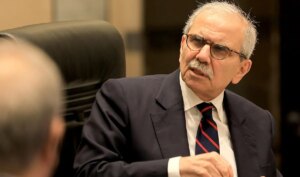
The scholar, Mr. Ali Fadlallah, called for the adoption of a comprehensive religious and national discourse characterized by moderation, far from fanaticism and incitement of fanaticism and strife, stressing that Lebanon is based on the unity of its people and the protection of civil peace, not on sectarian and sectarian discourses.
This came during a dialogue meeting organized by the Islamic Cultural Center in the Haret Hreik region under the title “Islam’s Position on Excellence,” where Fadlallah addressed the concept of excellence as a legitimate responsibility and a societal necessity that contributes to human building and achieving progress. He explained that this concept is achieved through mastering work, developing capabilities, developing specializations, and investing time well in a way that serves society.
Regarding national affairs, Fadlallah touched on the importance of dialogue, stressing the necessity of choosing expressions that bridge distances and remove barriers, and staying away from everything that offends the feelings of others or violates sanctities. He believed that the primary goal of dialogue should be to clarify points of view and enhance understanding, not to argue and score points.
In response to questions about the performance of some clerics, he stressed that those with public responsibilities, especially religious ones, are required to play a unitary role that rejects hatred and malice. He added, “Lebanon is not built by slogans and speeches, but by uniting the efforts of its people and focusing on commonalities.”
In a related context, Fadlallah expressed his regret over the repeated phenomenon of preventing some people from selling land or residential apartments for sectarian or sectarian reasons, warning that these practices deepen divisions, divide regions, and fundamentally contradict the principle of coexistence.
On the security and political levels, he stressed the need to strengthen the capabilities of the Lebanese army and provide it with the necessary capabilities to protect the nation and preserve its sovereignty. Regarding the file of the “UNIFIL” forces, he stressed that Lebanon’s interest and sovereignty must be placed at the heart of any future arrangements, while stressing that any force that may be replaced as an alternative must be concerned with the interests of the Lebanese and achieving stability and national security.
In his reading of the repercussions of the Israeli elections on the Lebanese arena, Fadlallah pointed out that there are commonalities between the competing Israeli parties regarding the Lebanese file despite the differences in approaches, indicating that decision-making in Israel is affected by broad internal and external interactions and tensions and is not limited to the prime minister alone.
These positions come at a sensitive time in which the internal arena is witnessing intense discussions about the future of the UNIFIL forces and the role of the military institution, in addition to the challenges related to civil peace, sectarian discourse, and relations between the various Lebanese components.