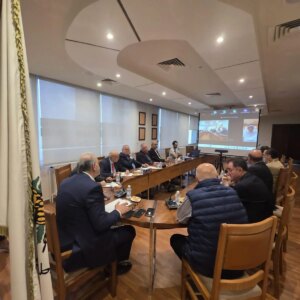
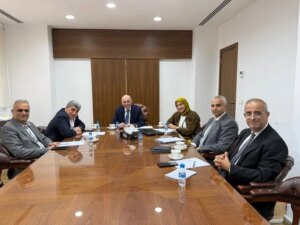
In a statement to Lebanon Debate following the indicator committee meeting, the head of the Beirut Merchants Association, Nicolas Chammas, affirmed the economic bodies’ keenness on the continuity of institutions and the protection of employees’ rights, considering that maintaining economic and social stability represents a common interest for employers and workers alike.
Shammas explained that employers bore double financial burdens during the last stage due to the rise in fees, taxes, and energy costs, stressing that the private sector does not bear the burden of crises resulting from war, imported inflation, or tax and financial decisions that doubled operating costs. He believed that the current crisis is regional and international and not traditional internal, which requires focusing on alleviating the current burdens without harming the productive sectors.
Regarding the transportation allowance file, Shammas announced that employers will provide an additional, agreed-upon contribution equivalent to the cost of five liters of gasoline per day. He described this measure as a new additional burden on institutions, wondering what steps the state will take to involve the private sector in bearing this cost.
Shammas called on the government to take urgent measures to reduce the burden of energy and fees on the private sector, similar to what several countries have done by reducing taxes or providing incentives to those affected. He also called for a radical and effective treatment of the issue of electric generators and improving the production of official electricity to reduce the exorbitant bill that burdens citizens and institutions alike.
In conclusion, Shammas pointed out that many companies are taking the initiative to provide additional assistance and compensation to their workers, expressing his hope that these contributions will not be subject to any tax burdens or additional contributions to the National Social Security Fund, to ensure the continuity of employers’ support for their employees. He concluded by emphasizing the existence of continuous cooperation between the economic bodies, the General Labor Union, and the Ministry of Labor to pass this stage with the least losses, while preserving the continuity of the institutions’ work and the rights of their workers.