Washington and Beijing are engaged in secret talks away from the limelight, dealing with the rapid expansion of China’s nuclear arsenal and US accusations against Beijing of conducting banned low-yield nuclear tests, according to a report published by journalist Amit Avitan on the Israeli Walla website, citing the Wall Street Journal, amid ongoing efforts to not yet reach a binding arms control agreement.
The two sides held rounds of discussion on the sidelines of multilateral meetings in Geneva, New York, and Casablanca in Morocco, and an additional round is expected to be completed next month, as the United States pressed to get China to respond to accusations of conducting secret, very low-power tests, in light of American doubts about Beijing’s commitment to the ban on nuclear tests that has been in place for nearly three decades.
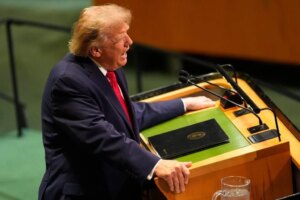
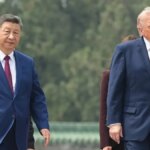
This nuclear dialogue comes in parallel with broader efforts to stabilize relations ahead of an upcoming meeting between US President Donald Trump and his Chinese counterpart, Xi Jinping, following the meeting of world leaders at the United Nations General Assembly, where trade, artificial intelligence, and economic deals will top the summit’s agenda, although Chinese nuclear expansion remains a pressing factor on American policy.
Christopher Yao, an official at the US State Department for arms control affairs, confirmed during a conference held last August in Ohio, Nebraska, that Russia and China showed initial signs of openness to discuss strategic stability, adding that the two sides are still very far from discussing restrictions, maximum limits, or basic quotas, as the current talks focus on reducing risks and not concluding a formal agreement, in light of Beijing’s previous categorical refusal to engage in similar arms negotiations.
The most sensitive dispute revolves around Washington’s accusation that Beijing is violating the Comprehensive Nuclear Test Ban Treaty of 1996, a treaty that has not yet entered into legal force due to the failure to complete the ratifications of the required countries, which has kept field inspection mechanisms idle, while the major countries are officially committed to refraining from nuclear explosions. Although it is permissible to conduct tests related to weapons safety provided that they do not lead to an explosion, the Trump administration accuses China of going beyond this and carrying out secret tests with very low returns, including a supposed experiment conducted in June 2020 at the “Lop Nor” site in northwestern China, which was strongly denied by the Beijing authorities.
Tensions escalated in October 2025 when President Trump threatened to resume US nuclear testing “on an equal basis” if Beijing and Moscow did not stop their suspected activities. This came after he received a secret letter from three Republican lawmakers: Chairman of the Senate Intelligence Committee Tom Cotton, Chairman of the Armed Services Committee Roger Wicker, and Chairman of the Foreign Relations Committee Jim Risch, regarding allegations that the two sides had conducted “supercritical” or low-power experiments.
In light of this escalation, Washington is proposing the possibility of adopting new verification mechanisms to reduce mutual suspicions, and with the absence of any imminent indications of negotiations imposing binding restrictions on arsenals or setting limits on weapons, this direct dialogue reflects the desire of the two powers to test initial steps to reduce risks amid the continuing strategic competition between them on several fronts.