Lebanon is facing a union and social week full of movements and strikes, amid stifling living crises exacerbated by the record rise in prices, especially fuel, and the decline in citizens’ purchasing power, unless the upcoming ministerial and union meetings succeed in containing popular anger.
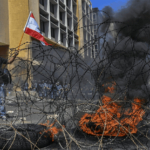
In this context, and prior to the upcoming indicator committee meeting with the General Labor Union and economic bodies, the Federation of Trade Unions and Employees in the North carried out a sit-in in the city of Tripoli under the slogan “In defense of the livelihood of all of us.” The movement witnessed widespread participation by union bodies and employee associations from the public and private sectors, as participants and bus drivers blocked the roads leading to the sit-in square.
On the financial level, negotiations between Lebanon and the International Monetary Fund have entered a very sensitive phase, going beyond generalities to the essence of the financial and banking crisis. The discussions focused on determining the size of the accumulated losses since 2019, the distribution of burdens, mechanisms for recovering deposits, and how to restructure the banking sector in isolation from placing additional burdens on the Lebanese economy.
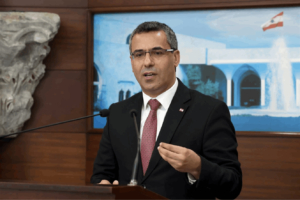
In statements to Al-Diyar newspaper, Finance Minister Yassin Jaber explained that the discussions with the IMF mission covered various aspects of the national economy, with special attention paid to the path that must be adopted to approve the financial gap law, stressing that addressing the banking crisis that has been going on for nearly seven years can no longer tolerate any delay.
Jaber pointed out that efforts are continuing in cooperation with the relevant authorities to complete the financial gap law, in preparation for launching a real path to recover depositors’ money and restore the banking sector to its natural role in financing and growth, pointing out that this law, along with the reform package, will pave the way for a final agreement with the IMF to enhance confidence and attract international support.
For his part, writer Joseph Farah reported in Al Diyar that the approval of the financial gap law may face some delay, given the Ministry of Finance and the government’s preoccupation with preparing the 2027 budget and referring it to the House of Representatives within the prescribed constitutional deadline, amid efforts to refer the draft budget next week, with the government and Parliament then devoting time to studying the financial gap law.
This time overlap presents the negotiations with major challenges in light of the pressure of the crisis and the worsening social burdens, while awaiting a practical plan that will restore depositors’ rights that have been threatened for years. Meanwhile, Minister Jaber is preparing to continue his consultations with the International Monetary Fund during an upcoming visit to the United States of America with the participation of the Governor of the Bank of Lebanon.
The government is counting on the upcoming rounds to bring views closer to the Financial Gap Law and move from the principles stage to implementation mechanisms. The most prominent challenge remains the Lebanese state’s ability to formulate a balanced equation that reconciles the requirements of financial reform, the rights of depositors, and the economy’s ability to bear losses to reach a final agreement with the IMF.