Beirut:
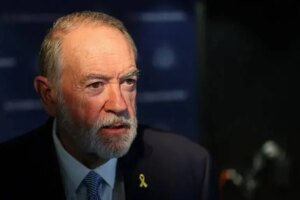
The International Monetary Fund mission, headed by Ernesto Ramírez Rigo, concluded an official visit to the Lebanese capital, Beirut, that lasted from September 15 to 18, 2026, during which it held intensive discussions with the Lebanese authorities, focusing on the macroeconomic prospects and the progress made in financial and banking reforms, in addition to the files of bank restructuring, deposit recovery, the 2027 budget, and value-added tax.
The head of the mission indicated, in a final statement, that the conflict between Hezbollah and Israel and regional security developments had caused serious damage to the Lebanese economy and living conditions. The Fund expected that economic activity would witness a noticeable contraction during the year 2026, with inflation rates remaining in the double digits and the current account deficit widening mainly as a result of rising energy costs. The statement also pointed to extensive damage to infrastructure and housing, accompanied by widespread waves of internal displacement and a significant decline in the living standards of the displaced.
On the financial level, the Fund’s mission praised the ability of the Lebanese authorities to maintain a degree of stability amidst these exceptional circumstances, by continuing to implement cautious financial and monetary policies. She welcomed the progress achieved in budget management since the previous visit of the Fund experts, considering it an important step towards a more sustainable financial situation. The experts also welcomed the approval of the amendments to the law on regulating and resolving banks’ conditions, stressing that they are in line with international best practices and provide an effective and organized framework for resolving and liquidating banks’ conditions.
Discussions with the Lebanese side focused on the amendments required to align the Financial Stability and Deposit Recovery Law with international standards. The Fund’s experts stressed the importance of respecting the priority order of creditors, so that depositors do not bear losses before shareholders and lower-level creditors, stressing the need for the restructuring process to lead to a sound and sustainable banking sector, and for the proposal to repay deposits to be consistent with the viability of the banking sector and the sustainability of public debt.
Regarding the 2027 budget, Fund experts welcomed the goal of achieving a balanced financial situation and introducing measures to enhance tax compliance. The statement indicated that increasing the value-added tax rate to 12%, which was approved by the Council of Ministers to finance the increase in public sector wages and pensions approved in February 2026, has not yet entered into force. The Fund urged the authorities to move forward with legislative approval of this increase, and to comprehensively include all externally funded expenditures in the budget, while giving priority to supporting internally displaced persons and making room for investment spending.
The Fund warned against any additional increases in salaries and pensions on a discretionary basis and without corresponding measures to increase revenues, calling for studying any similar measures within a comprehensive financial framework. He also welcomed the preparation of a medium-term financial framework, noting that progress has been made in its development, while emphasizing the need for more work to determine the priorities of financial measures and the sequence of their implementation, and to integrate investment and social spending needs, considering that adopting a reliable medium-term financial framework is essential for framing annual budgets, restoring financial sustainability, and providing space for spending on reconstruction and social protection.