“Lebanon Debate”
The “Lebanon Debate” correspondent reported that the people of the city of Tripoli wake up almost daily to thick clouds of black smoke covering the sky of a number of areas, coinciding with the spread of unpleasant and annoying odors, in a scene that has become recurring and arouses residents’ dissatisfaction and fears about its health and environmental repercussions.
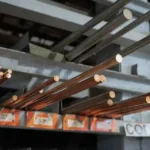
According to available data, the source of the smoke is the burning of tires and electrical wires in order to extract copper from them, which leads to large amounts of smoke rising and spreading throughout the neighborhoods and surrounding areas.
The repetition of these practices raises increasing concerns among families, especially since burning tires, plastic materials, and insulation surrounding wires leads to the emission of a mixture of pollutants, fine particles, and harmful gases, which can affect air quality and increase risks to the respiratory system, especially for children, the elderly, and people most affected by air pollution.
The problem is not limited to visible smoke and emitted odors, as random burning operations also leave ash and polluted residues that can be transferred to the soil and water, transforming the phenomenon from a daily nuisance into an environmental problem that requires sustainable treatment and serious control.
In this context, the people of Tripoli call on the concerned authorities, especially the Municipality of Tripoli and the North Lebanon Governorate, to move urgently to put an end to this phenomenon, by intensifying control over burning sites, identifying those responsible for them, and taking the necessary measures against violators, to prevent the population from continuing to be exposed to these emissions.
These appeals gain additional importance in a city that already suffers from multiple environmental pressures related to population density, traffic, electric generators, and waste, which makes any additional source of air pollution a factor that increases the environmental and health burdens on the population.