Translation of “Lebanon Debate”
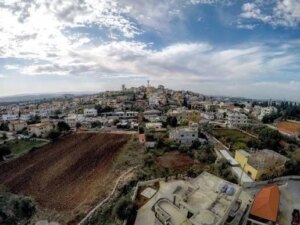
Kiryat Shmona, the Israeli city adjacent to the Lebanese border that was exposed to Hezbollah missiles and most of its residents were evacuated during the war, faces a remarkable political test as the 2026 elections approach: Will it maintain its historic loyalty to the Likud Party, or will it punish Benjamin Netanyahu’s government after the war left it an almost deserted city?
According to a report by journalist Yair Kraus in Yedioth Ahronoth newspaper, only about 40% of its residents have returned to Kiryat Shmona, despite nearly two years having passed since the first ceasefire on the northern front entered into force.
Residents complain of faltering reconstruction, poor services, and failure to implement government promises. More than 350 students were recently removed from the city’s school records after their families decided to leave permanently, an indication that displacement will continue even after the widespread fighting has stopped.
Kiryat Shmona is traditionally one of the most prominent strongholds of the Israeli right. In the 2022 elections, Likud obtained 49.47% of its votes, while the parties affiliated with the Zionist opposition together received only about 22.63%.
However, the feeling of abandonment of the city put this loyalty to an unprecedented test. One of its residents estimates that the number of residents has decreased from 26,000 to about 9,500 people, saying that the funds approved to fortify the north years ago did not reach Kiryat Shmona.
Positions are divided between those who hold the government responsible and those who separate it from the results of the confrontation with Hezbollah. Eli Abergel, a long-time Likud member, said: “The war caused unbearable damage to Kiryat Shmona. It was not the government, it was the war that did that.”
Despite his admission that previous governments did not give the city the required attention, Abergel asserts that he will continue to vote for Likud based on his ideological affiliation, expressing his belief that the next government will develop a serious plan for the reconstruction of Kiryat Shmona.
On the other hand, David Abraham, a native of the city, gives the government a “zero” mark, considering that the crisis did not begin with the last war, but rather goes back to years of neglect and the absence of investments and basic services. He decided to vote for Netanyahu’s competitor, Gadi Eisenkot, because he led the northern region and knew its needs.
Thus, Kiryat Shmona turned into a political model for the repercussions of the war on the Lebanese front: a city that was a guaranteed electoral reservoir for Likud, but it enters the 2026 elections burdened by displacement, destruction, and a feeling of neglect. The question remains whether Hezbollah’s missiles have also changed the direction of their votes, or whether their loyalty to Netanyahu will hold once again.