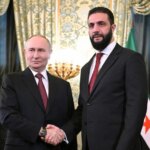
Moscow and Damascus are moving towards installing a new formula for the Russian military presence in Syria, in an agreement expected to be signed during the coming period that gives Russia the right to continue using its main bases, in exchange for the Russian army training the Syrian armed forces and security services, in a move described as a major strategic gain for Russian President Vladimir Putin.
According to a report by journalist Assaf Rosenzweig on the Israeli “N12” website, reports by “Bloomberg” and “Reuters” agencies stated that Russia will be able to continue maintaining military forces in its major bases inside Syria, while the Russian army, in return, will train the Syrian army and help rehabilitate the forces affiliated with President Ahmed al-Sharaa.
The Syrian Ministry of Foreign Affairs confirmed that the bases would be transformed into “training centers,” while Russia announced in parallel that it would reopen its cultural center in Damascus, known as the “Russian House.”
According to Bloomberg, Moscow achieved an important breakthrough, after it apparently succeeded in maintaining its military presence in Syria under an expected new agreement with the Sharaa government in Damascus. In a separate report by Reuters, a Syrian source was quoted as saying that “Russian forces are also expected to remain in Syria” within the framework of the agreement.
Reports indicate that the Russian army will train and qualify the Syrian army forces and other security services in the country, in exchange for Moscow remaining in its main military bases.
Syrian officials have confirmed in recent weeks that Moscow and Damascus are close to reaching an agreement on the future of the Russian military presence, amid previous estimates that Russia may have to evacuate its forces, but new data indicate the opposite path.
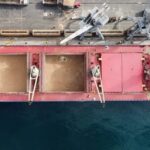
According to Bloomberg, the Russian fleet will continue to reach the Syrian port of Tartus, while the Russian Ministry of Defense will be able to continue using the Hmeimim Air Base as a center for transportation, transit, and logistics services, which will also allow it to support the Kremlin’s military activities in Africa.
The report quoted a Russian source as saying that the agreement establishes a long-term legal basis for the Russian presence in Syria, in parallel with building relations with the government of President Ahmed al-Sharaa.
The source added that Moscow’s involvement in training the new Syrian armed forces would also help build confidence between Damascus and Moscow.
A Syrian source familiar with the terms of the agreement also told Reuters that Russian forces will remain stationed in the new training centers.
Maintaining military bases in Syria is an important gain for Putin, who sought to maintain a strategic foothold in the Mediterranean after the overthrow of his ally Bashar al-Assad in December 2024 by armed Islamic groups that Putin himself had targeted militarily during his support for Assad.
Russia helped Al-Assad leave Syria and granted him asylum in Moscow, while reports about the new Russian-Syrian agreement coincided with the issuance of a death sentence in Syria against Al-Assad and a number of those close to him.
Tartous is the only Russian naval base in the Mediterranean, and Moscow has maintained a presence there since 1983, that is, since the Soviet Union era.
As for the Hmeimim air base, Russia established it in 2015 at the beginning of its military intervention in Syria during the war, and used it to bomb opposition forces, including the forces of the current president, Ahmed al-Sharaa, who was known at the time as Abu Muhammad al-Julani.
On Sunday, the Syrian Ministry of Foreign Affairs announced a memorandum of understanding, and said that the air and naval bases would be transformed within 3 months into “joint training and rehabilitation centers,” according to what was reported by the official Syrian News Agency.
According to SANA, Damascus will take over the management of civilian facilities in the two sites, while the Russian presence on the Syrian coast will be subject to “reorganization,” within the framework of an agreement that “preserves the interests of both countries.”
The report indicated that Moscow’s agreement to modify some functions of its military bases and allow parts of the facilities to be used for civilian purposes, allowed it to preserve these sites and continue to use them to support its activity in Africa.
In parallel, the official Russian “TASS” agency reported that Moscow would reopen its cultural center in Damascus, known as the “Russian House,” after a Russian delegation held talks over the weekend with Syrian officials.
Despite Putin’s long support for Assad, Al-Sharaa did not demand an immediate Russian withdrawal from Hmeimim and Tartous, even though Moscow significantly reduced its military presence there shortly after the new government took control of the country.
Previous reports had stated that Al-Sharaa asked Putin to hand over Assad to Syria as part of the deal between the two countries, but previous estimates indicated that the Russian President’s approval of such a request seemed unlikely.
Thus, Moscow appears to be on its way to reformulating its presence in Syria instead of ending it, by transforming its bases from a symbol of the Assad era into training and logistics platforms that guarantee its continued military and strategic presence in Syria and the Mediterranean.