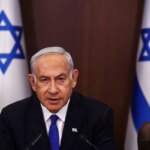
The Israeli army returned to carrying out attacks in the Gaza Strip for the second day in a row, after a period of stopping assassinations under the direction of the political level, in parallel with the “Peace Council” announcing the start of operating a mechanism to monitor violations of the agreement. In Washington, the US administration acknowledges that the approaching Israeli elections place Prime Minister Benjamin Netanyahu before complex calculations, and therefore gives him a “certain margin” in dealing with the US plan, in exchange for a continued cessation of targeted assassinations.
According to a report by journalists Gal Ganot and Itamar Eichner on the Israeli Ynet website, on Monday evening, the Israeli army carried out an attack in the Gaza Strip for the second day in a row, after the attack that occurred the previous day and was the first since the army ceased fire under the guidance of the political echelon and suspended targeted assassinations.
Unlike the previous attack, in which Israeli forces shot a Hamas sniper who was spotted near the “yellow line,” this time the Air Force carried out an attack that it said was aimed at “removing a threat” in the northern Gaza Strip.
Reports from Gaza said that the strike was the first air strike in more than a week, indicating that one person was killed.
In parallel, the Director General of the “Peace Council” in Gaza, Nikolai Mladenov, discussed this afternoon the developments in the situation in the Strip, against the backdrop of the “road map” for implementing the agreement with Hamas.
After the previous day’s attack, Mladenov announced that “in recent days a mechanism has been put into operation to monitor violations, and every verified violation will be addressed.”
He also denied reports that there was a “financial agreement” between the Peace Council and Hamas.
Mladenov, whose official title is defined as “high representative of Gaza,” said: “The allegations about a financial agreement between the peace council and Hamas are false. Such a proposal was not discussed, nor was it negotiated, nor will it be discussed, and it will not be on the table either in the future.”
He pointed out that the Peace Council was established within the framework of US President Donald Trump’s plan for Gaza and in accordance with Security Council Resolution No. 2803.
He added: “The two documents are public and clear: Hamas will have no role in governing Gaza, and it will not have any access to funds.”
Mladenov stressed that “the Peace Council’s funds do not pass through Hamas. Every contract is subject to examinations and approvals, every work is verified before payment, and all accounts are open to full scrutiny by donor governments.”
He added, “The International Stabilization Force is designed to support disarmament and the establishment of a civilian administration in which Hamas will have no role. This has been our position from the beginning and has not changed.”
On the other hand, American officials explained to Politico that the administration was “disappointed” by Netanyahu’s rejection of the 15-point plan, which constitutes the road map, but it modified its position after it became clear to it that Israel had stopped attacks on the ground and was actually working according to the plan, at a time when the forces had received instructions on the necessity of obtaining the approval of the Chief of Staff before carrying out any attack.
An American official said that the administration is ready to give Netanyahu “a certain margin” to formulate the plan in the way he needs.
He added: “We are aware of the complications resulting from the elections in Israel, and of course we will give Bibi some room to try to manage this situation.”
But he made it clear that Washington expects a return from Netanyahu, saying: “They must give us some space in terms of stopping targeted assassinations, so that we can try to reach the next stage, and therefore there are still very many challenges on the way.”
Washington is aware, according to the report, that Netanyahu faces a complex situation as the elections approach, as he is exposed, on the one hand, to pressure from his hardline partners, and on the other hand, to pressure from the US administration, in conjunction with opinion polls that are not encouraging for him.
The United States, through the Peace Council and mediators Türkiye, Qatar, and Egypt, conducted negotiations with Hamas regarding the plan, which, on paper, is supposed to lead to the movement’s disarmament.
According to the plan, Hamas must give up its weapons and hand over power in Gaza to a committee to manage the Strip called the “government of technocrats,” while Israel must withdraw the Israeli army.
But the first obstacle appeared immediately after the plan was announced, as Hamas said that it would not give up its weapons before Israel withdrew, while Israel said that it would not withdraw before Hamas was disarmed.
Despite the public confidence shown by Trump when he announced a “historic agreement to completely disarm Hamas,” administration officials expected the plan to face objection from Israel, but they believed that the talks could practically continue.
The American official reiterated that “no one had previously reached the stage of making Hamas agree to this, and therefore this is a necessary step before it actually disarms.”
Another administration official said that the Peace Council, which includes 27 countries, “has recently enjoyed good cooperation on the ground,” adding: “This is what is important.”
One day after Netanyahu rejected the road map, senior officials in the Peace Council considered that the matter was nothing more than statements.
They said: “We look at actual actions, and less at words and announcements. In practice, Israel has stopped assassinations and is maintaining the ceasefire.”
They added: “In fact, Israel is implementing the 15-point agreement. The Israeli army practically stands at the original yellow line, which includes 53% of the Strip, and there are no sites or forces beyond the yellow line. Israel is implementing the document, even though it rejects it in its statements.”
The former US ambassador to Israel during the Barack Obama administration, Dan Shapiro, said: “For Netanyahu, the main goal, of course, is to overcome the elections.”
He added: “So he will at least announce his rejection, even while he may allow some aspects of the plan to advance.”
He continued: “It seems that Trump is tolerating this Netanyahu dance, and is ready to bear the declared rejection.”
The Peace Council confirms that “separate talks with Israel are continuing,” and that the road map represents an agreement between the Peace Council and Hamas.
But on the ground, and at least in public positions, Hamas links its willingness to disarm with the Israeli army’s withdrawal from Gaza, which leaves doubts about the possibility of implementing the plan in the long term.
In his statements, Mladenov stressed that “Israel is not required to rely on trust or implement irreversible steps before taking steps that can be verified on the ground.”
He added, “The goal remains complete disarmament and ensuring that Gaza never returns to posing a threat of the kind that Israel faced on October 7.”
He continued: “The alternatives are for Hamas to remain in power and rebuild its military capabilities, or for Israel to return to control over the entire population of Gaza at a huge human, military and economic cost.”
He concluded by saying: “The Peace Council proposes a third option: complete disarmament, civil administration, an international security presence under American leadership, and mechanisms for monitoring and verification. There are enough real challenges in this endeavor, and there is no need to invent additional challenges.”
Between the resumption of limited Israeli attacks and the mechanism for monitoring new violations, the implementation of the Gaza plan remains linked to a delicate equation: Washington gives Netanyahu a political margin due to the elections, but in return it wants to preserve the cessation of assassinations and open the way to the next stage of the agreement.