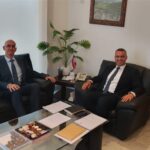
During the meeting, they discussed ways to develop agricultural cooperation between the two countries, enhance the exchange of experiences, technologies and knowledge, in addition to examining the possibilities of stimulating trade exchange in agricultural and food products, and facilitating the access of Lebanese products to Bulgarian and European markets, within the approved legal and regulatory frameworks.
In this context, and after completing the approved legal and administrative procedures and official procedures, it was approved to assign the Minister of Agriculture, Dr. Nizar Hani, by a decision of the Council of Ministers, to sign a memorandum of understanding regarding cooperation in the field of agriculture between the Ministry of Agriculture of the Lebanese Republic and the Ministry of Agriculture and Food of the Republic of Bulgaria.
The anticipated memorandum of understanding constitutes an institutional framework to enhance agricultural cooperation between the two countries, modernize the foundations of existing cooperation, in line with developments taking place in the agricultural sector and food production and trade chains, and enhance the partnership between agricultural, scientific and technical institutions in the two countries.
Broad cooperation covering plant and animal production, forestry and food safety
The memorandum of understanding includes broad areas of cooperation, most notably agricultural research, plant production, livestock, forestry, plant and animal health, and food safety, in addition to exchanging experiences and knowledge in artistic and technological fields of common interest.
The memorandum also focuses on cooperation in the field of plant and veterinary health, including technical and regulatory requirements related to import and export, and the exchange of relevant information and documents, which contributes to facilitating the movement of agricultural, animal and fishery products between the two countries in accordance with approved standards.
The memorandum attaches special importance to the development of agricultural and food trade, by encouraging the exchange of products and facilitating the access of the products of each country to the markets of the other party, while enhancing communication between the competent authorities and exchanging requirements and procedures related to agricultural trade. Technology, innovation and sustainable agriculture
Areas of cooperation also include the introduction and development of modern technologies in plant and animal production, cooperation in testing and preserving varieties and monitoring seeds, in addition to enhancing the protection of the agricultural environment, the rational use of natural resources, and the development of more sustainable agricultural production models capable of facing climate and economic challenges.
The memorandum also opens the way for enhancing cooperation in agricultural scientific research, technology transfer, and accelerating the application of scientific results and research in the agricultural sector, which contributes to raising the level of innovation and productivity and enhancing the competitiveness of the agricultural sector in the two countries.
It also includes an area for cooperation in protecting, managing and exploiting forest resources in a sustainable manner, in addition to the possibility of expanding areas of cooperation in the future to include any other sectors or topics agreed upon by both parties.
Exchange of experiences, training and technical cooperation
In order to transform areas of cooperation into practical programmes, the memorandum stipulates the implementation of a set of joint activities, including organizing seminars, workshops and training courses, exchanging information and experiences, and implementing technical and administrative cooperation activities, in addition to any other forms of cooperation agreed upon by both parties.
This framework would enhance direct communication between agricultural, scientific and technical institutions and bodies in Lebanon and Bulgaria, and help build practical, implementable partnerships, especially in the fields of agricultural technology, food safety, phytosanitary and veterinary health, scientific research, and sustainable agriculture.
Updating the Lebanese-Bulgarian agricultural cooperation framework
The memorandum of understanding gains additional importance because it comes in the context of modernizing the legal and institutional framework for agricultural cooperation between Lebanon and Bulgaria, as it stipulates the termination, upon entry into force of the new memorandum, of the agricultural agreement signed between the Ministry of Agriculture, Forestry and Agrarian Reform of the Republic of Bulgaria and the Ministry of Agriculture of the Lebanese Republic in Sofia on June 25, 1998.
The new memorandum of understanding is scheduled to enter into force from the date of its signing, for a period of three years, with the possibility of automatically renewing it according to the mechanism stipulated in it, thus establishing a long-term framework for agricultural cooperation between the two countries.
This path comes within the framework of the Lebanese Ministry of Agriculture, led by Minister Dr. Nizar Hani, to expand the network of international agricultural cooperation, diversify partnerships, open new markets for Lebanese production, and benefit from international expertise and technologies, in a way that enhances the competitiveness of the agricultural and food sector and serves Lebanese farmers, producers and exporters.
During the meeting, Minister Hani stressed the importance of moving Lebanese-Bulgarian agricultural relations from the level of traditional cooperation to practical partnerships based on the exchange of knowledge and technology and the promotion of agricultural and food trade and investment, stressing that Lebanon has agricultural and food production that enjoys competitive capabilities, and that the Ministry is working to support the Lebanese product and improve its ability to access foreign markets in accordance with international standards.
In turn, the Bulgarian ambassador stressed the importance of developing cooperation with the Lebanese Ministry of Agriculture, and taking advantage of the opportunities available to strengthen agricultural and commercial relations between the two countries, especially in the areas of exchanging agricultural expertise, technology, and agricultural and food trade.
This step comes within the framework of agricultural diplomacy adopted by the Lebanese Ministry of Agriculture as a tool to open markets, enhance food security, develop production, attract knowledge, technology and investments, and consolidate the presence of Lebanese products in regional and international markets.