“Lebanon Debate” – Walid Khoury
It is not a passing detail that a phone call took place between US President Donald Trump and President Joseph Aoun at the height of an open regional clash, nor that it extended for 29 minutes at a moment when Washington is busy managing one of the most complex confrontations with Iran. In political calculations, time has its meanings, and when Lebanon is given this space, it is a clear indication that its position has returned to the sphere of actual, not formal, interest.
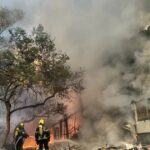
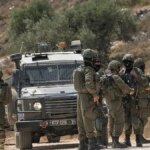
During the past two months, Lebanon has faced one of the most dangerous stages in its modern history. A massive Israeli escalation destroyed villages, towns and cities, caused severe damage to infrastructure, and imposed a harsh field reality with the occupation of dozens of villages and the displacement of hundreds of thousands of citizens. In the midst of this scene, the President of the Republic proposed the option of direct negotiations and a ceasefire, in a step that seemed at the time outside the general context, and was even met with criticism and skepticism from multiple internal forces that considered the proposal unrealistic or unachievable.
However, subsequent developments showed that this option was not a political adventure as much as it was a proactive reading of the course of events. Washington, which seeks to contain the escalation and prevent its expansion, found in the Lebanese initiative a practical gateway to reducing tension. Hence, the contact between Trump and Aoun gains its significance, as it indicates an intersection of interests and an implicit adoption of a path whose importance everyone has realized.
On the field, a remarkable transformation emerged, representing the transition from escalation to a ceasefire, even in its initial stage. This transformation would not have occurred without direct American intervention, and from Trump personally, and President Aoun’s insistence on achieving it before direct negotiations began, which gave the position of the Presidency of the Republic an advanced dimension as a body capable of presenting a workable approach at a very complex moment. What was seen at the beginning of the war as a theoretical option turned into an actual path that stopped the slide towards a broader confrontation, which was not what many had expected.
On the other hand, the Lebanese interior reflects a different picture. Political positions, especially within the Christian arena, seemed hesitant or largely absent, with the exception of the position of Bkerke, which declared its clear support for the option of stability and negotiation. This absence cannot only be read as political caution, but rather raises serious question marks about the performance of forces that are supposedly directly concerned with supporting the position of the Presidency of the Republic at a pivotal sovereign moment.
Is he hesitant to take a stand? Or narrow political calculations that take precedence over the national interest? In moments of major transformation, presence is not measured by silence, and absence is not interpreted as neutrality, but rather translates into either clear support or costly inaction.
The issue goes beyond the negotiation process itself, and affects Lebanon’s position in the next stage. The President of the Republic is practically proposing a repositioning of Lebanon, after decades of involvement in regional axes, towards a more balanced formula. This proposal opens the door to a deep strategic discussion, especially in light of the continuing complications related to Hezbollah’s weapons and Iran’s role in the internal equation.
In parallel, there is an increasing external interest in supporting the stability path. Saudi Arabia has intensified its contacts with Lebanese officials in recent weeks, while the Vatican is expected to accompany any initiative that leads to stabilizing peace. This international-Arab intersection gives the path additional momentum, but it is not enough alone in the absence of a coherent internal position.
In conclusion, the 29-minute call cannot be treated as a passing event. It is an indication of the beginning of a path that may open for Lebanon a rare window out of the cycle of crises. However, this path, no matter how much external support it enjoys, remains dependent on the extent of the internal willingness to seize the opportunity.
Between a president who presents an option and translates it, and political forces that are still captive to hesitation or narrow calculations, the question remains open: Will Lebanon make good use of this moment, or add it to the record of missed opportunities?