The administration of US President Donald Trump is intensifying its diplomatic efforts to reach a peace agreement that ends the Russian-Ukrainian war before the beginning of January 2027, prior to the transfer of control of Congress to the Democratic Party.
In detail, a press report issued today, Friday, based on four informed sources, stated that the US administration informed European and Ukrainian officials of its desire to resolve the agreement within this time limit.
This movement comes in the wake of the summit that brought together the US President with his Russian counterpart, Vladimir Putin, and his Chinese counterpart, Xi Jinping, in the Chinese city of Shenzhen, on Thursday. During the summit, Trump held a bilateral meeting, not included in the agenda, with Putin, to discuss ways to end the war directly, according to an American official.
In a related context, Trump asked Chinese President Xi Jinping, during their bilateral meeting, to provide assistance in efforts aimed at ending the conflict. Jared Kushner confirmed, during a press conference held on Thursday, that Trump sent a strong message to both Putin and Xi about his desire to achieve peace and to involve them effectively in the settlement process.
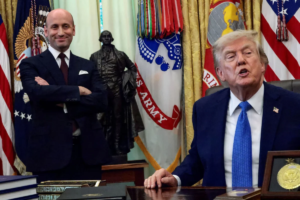
During his return flight on Air Force One on Thursday, Trump joined by phone a meeting held by his envoys Steve Witkoff and Jared Kushner in Berlin, which included Ukrainian President Volodymyr Zelensky and a number of European leaders. People who attended the meeting reported that Trump stated that “Putin wants to end the war and conclude an agreement, and he is starting to feel tired of this matter.” Witkopf and Kushner informed European leaders that Trump had put pressure on the Russian president to push the negotiations forward.
The German capital, Berlin, witnessed a meeting of Trump’s envoys with German Chancellor Friedrich Merz, French President Emmanuel Macron, British Prime Minister Andy Burnham, and Ukrainian President Volodymyr Zelensky, along with other European leaders.
During the meeting, Witkov and Kushner sought to dispel the Europeans’ fears, stressing that Washington does not intend to conclude a unilateral agreement in isolation from them, or make decisions related to the future of Ukraine and European security without their participation. Kushner stressed that “President Trump wants to reach an agreement in which Europe is on his side, and he does not seek to impose anything unilaterally.”
For his part, Trump – via the phone call – urged European leaders to open direct channels of communication with Putin, addressing the German Chancellor by saying: “Friedrich, you can make a phone call with Putin, and this will help reach an agreement,” adding that “Xi respects Zelensky, Putin is ready to conclude the agreement, and Zelensky can reach a major agreement.”
In a parallel development, Russian President Vladimir Putin announced, on Thursday, for the first time publicly, his openness to the participation of European countries in peace talks. Putin said in a press conference after his meeting with Trump: “We realize that there is no point in discussing security issues, including those related to Europe, without the participation of the Europeans,” indicating that Moscow needs to know what European countries will bring to the negotiating table, and expressing his readiness to present an updated proposal regarding a security agreement between Russia and Europe.
With this discrepancy between the deadline that Washington seeks to impose in early January, and the simultaneous diplomatic activity in Moscow, Beijing, and European capitals, efforts aimed at resolving the Ukrainian crisis are entering a decisive stage, awaiting the results of these contacts.