November 20, 2026

In light of the worsening humanitarian and living crises for the displaced from the southern border villages as a result of the widespread destruction inflicted on their areas as a result of the Israeli attacks that have continued for more than three years, a new humanitarian crisis has emerged represented by the difficulty of finding places to bury the dead, amid public calls for immediate action by the state and the concerned authorities to provide the elements of resilience for the people whose security conditions have prevented their return.
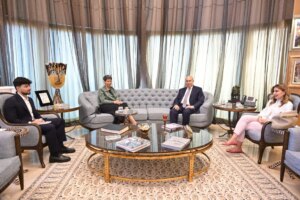
In this context, the Vice President of the Supreme Islamic Shiite Council, Sheikh Ali Al-Khatib, received an expanded delegation from the gathering of residents of the southern border towns. During the meeting, the delegation presented the tragic conditions of the displaced people who have exhausted their material and moral energies, handing Al-Khatib a written memorandum documenting their suffering and demanding urgent action to address it.
The delegation’s memorandum included a package of demands that it considered the minimum to ensure living in dignity, most notably: providing allowances for shelter, hospitalization, and free education, in addition to providing grants and soft loans for housing and relaunching economic interests, compensating farmers for their losses, giving the displaced priority in employment, and exempting them from fees and taxes. The memorandum also stressed that the greatest priority remains to create conditions for return to villages and secure the necessary compensation to launch the reconstruction process.
However, the most urgent demand raised by the memorandum was to secure plots of land to bury the martyrs and deceased of the “occupied” border villages, whether they were displaced or originally residing outside them. The delegation explained that most of the displaced are unable to bear the costs of purchasing graves, forcing some families to temporarily bury their dead on lands owned by other parties, warning of the future repercussions of this measure if the owners of those lands demand the return of their properties. The delegation proposed allocating lands belonging to the endowments of the Supreme Shiite Islamic Council or the Council’s contribution to purchasing them for this purpose.
For his part, the scholar Sheikh Ali Al-Khatib praised the steadfastness of the people of the border region and their great sacrifices, stressing that these sacrifices will not be in vain and that the people will soon return to rebuild their land. Al-Khatib considered that the destruction inflicted on the south was a direct result of the ongoing Israeli aggression and not because of the resistance that existed primarily to deter the occupation.
In his response to the delegation’s demands, Al-Khatib reviewed the contacts and efforts he had made locally and externally to provide resilience for the displaced, announcing his intention to hold close meetings with governors, mayors, and mayors to find a radical solution to the cemetery crisis. In a remarkable position, Al-Khatib criticized the performance of the Lebanese authorities in the relief file, wondering about the fate of hundreds of millions of dollars that arrived in aid and are still “frozen” without being distributed to the deserving displaced persons.
These developments reflect the depth of the tragedy experienced by the people of the southern border villages, as the crisis has gone beyond the loss of shelter and sources of livelihood, to affect the most basic human rights to death and burial, which places the Lebanese state before an urgent national and moral responsibility to address these complex issues, in parallel with adhering to the primary goal of securing the safe return of the villages and restoring life in them.