November 19, 2026

Lebanon is entering a feverish race against time before the end of 2026, the expected date for the end of the mission of the International Emergency Forces in the south, at a time when the external messages coming from Riyadh and Washington have become clearer and firmer than ever before. The stage of diplomatic niceties and being satisfied with verbal pledges is approaching its end, with an explicit American-Saudi intersection linking any support for the advancement of Lebanon to resolving the illegal weapons issue and returning the decision of war and peace exclusively to the Lebanese state.
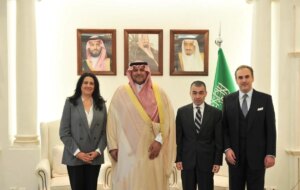
In a political tour away from the limelight that preceded his departure from Beirut, the Saudi envoy, Prince Yazid bin Farhan, carried a decisive message to Lebanese officials, stating that the Kingdom’s willingness to support Lebanon is conditional on the state taking an actual decision to disarm Hezbollah. According to the circulating data, Riyadh did not leave any margin for compromise solutions, as containing or freezing weapons is no longer an acceptable option. Rather, what is required are practical steps that prove the seriousness of the state and return to it alone the responsibility for security and sovereignty. Although Bin Farhan confirmed the Kingdom’s continued support for the current government despite its hybrid composition, this support does not mean a blank check, but rather puts it in front of the responsibility of proving its ability to extend its authority over the entire Lebanese territory.
This Saudi language complements what was presented by US envoy Mike Waltz during his meetings in Beirut, where he stressed the need for Hezbollah to hand over its weapons to the state, stressing that there can be no state with two armies, and that restoring sovereignty passes exclusively through legitimate institutions, most notably the national army, while declaring support for President Joseph Aoun’s decision to engage in the tripartite dialogue in pursuit of peace. From this standpoint, the message sent by President Aoun to the party of the necessity of surrendering its weapons cannot be separated from this pressing international climate, and his awareness that the margin for maneuver is narrowing, and that stagnation may place the country facing political, economic, and security entitlements that exceed its ability to bear.
In the face of this international intersection, in which passing administrative details do not change, such as the postponement of the Council of Ministers session due to an emergency family situation for Prime Minister Nawaf Salam, the Lebanese state is facing a fateful test that cannot afford to buy time. While the outside demands practical answers, not just good intentions, the Lebanese authority faces a delicate equation that forces it to balance in the sovereign concept between the inevitability of confining weapons to the legitimate forces alone, and the pressure to achieve a complete and unconditional Israeli withdrawal from the south, to avoid the country remaining in a costly waiting cycle and declining opportunities for international support.