November 19, 2026

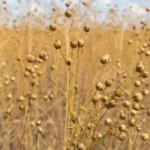
Egypt topped the list of the largest countries exporting raw and refined flax in the world during the year 2024, surpassing European production giants, in light of a noticeable growth in global demand for this crop for its multiple industrial and food uses.
According to data issued by the World Bank’s “Integrated Global Trade Solutions” platform, Egyptian flax exports recorded about $29.85 million. France came in second place with exports amounting to $7.93 million, followed by Belgium with $3.49 million. The list of the top ten exporting countries included: Lithuania, India, Canada, the United Kingdom, Romania, Italy, and the Netherlands.
As for global imports, Belgium topped the list with a value of $21.22 million, followed by Egypt second with $2.89 million, then Italy with $2.70 million, while European Union imports amounted to $1.10 million.
Although Egypt leads in exports, France maintained its global leadership in production volume with a total of about 1.05 million tons of raw flax during the year 2024, ahead of Belgium, which produced 91.9 thousand tons, and Belarus with 37.22 thousand tons, while Egyptian production reached about 7.7 thousand tons.
In the Arab world, Tunisia emerged as the largest importer of flax fiber with a value of about $901.68 million, according to the report, while Egypt maintained its position as the most prominent Arab country in flax cultivation and export.
Linen is a vital component in many sectors, as it is used in the manufacture of textiles, clothing, paper, insulation materials, and food oils, amid increasing reliance on it as a natural, sustainable alternative to synthetic fibres.
In the same context, future expectations indicate an expansion of the areas cultivated with flax on the European continent to range between 220 and 230 thousand hectares by 2026, compared to about 200 thousand hectares last year. Despite this, the market faces several challenges represented by high production costs and intense competition with synthetic fibres.