November 18, 2026

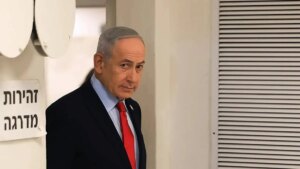
Israeli Prime Minister Benjamin Netanyahu faced a new legal obstacle after losing control of the Knesset presidency, following his attempt to replace former Parliament Speaker Amir Ohana by appointing him as Minister of Strategic Affairs in the caretaker government. The government’s judicial advisor, Gali Beharav Meara, intervened to impose restrictions on the move, stressing that it requires the approval of the Knesset, in which Netanyahu recently lost his majority.
According to a report published by journalists Moran Azoulay and Tova Tsimoki on the Yedioth Ahronoth website, the Likud Party intended to appoint Ohana as Minister of Strategic Affairs as a “consolation prize” after losing the presidency of Parliament to Matan Kahane, a member of the Yashar! Led by Gadi Eisenkot, who won the position after obtaining 66 votes compared to 52 votes for Likud candidate Ofir Katz.
Netanyahu’s judicial advisor explained that appointing a Knesset member who does not currently hold a ministerial position, such as Ohana, in an inactive ministry, requires Parliament’s approval. This situation differs from the appointment of Foreign Minister Gideon Saar as Minister of Interior, because the latter already held a ministerial position and did not need the approval of the Knesset.
The legal position is based on previous jurisprudence of the Israeli Supreme Court, which stipulates that the powers of the caretaker government in appointing ministers must be narrowly interpreted to prevent prejudice to the public interest, and that the use be limited to cases necessary to prevent a vacuum of power, such as the resignation or death of a minister, and not in cases of redistribution of portfolios or the addition of a new minister instead of an existing minister.
These developments reflect a shift in the balance of power within Parliament after 26 members were sworn in about a week ago, which left Netanyahu’s camp without a guaranteed majority, so the Prime Minister found himself facing a complex political and legal equation that prevented his decisions from being passed easily, as was happening previously.