November 16, 2026

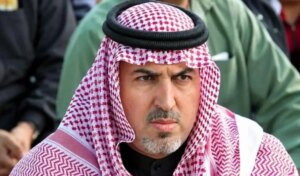
A member of the Loyalty to the Resistance Bloc, MP Hassan Ezz El-Din, called on the Lebanese political authority to retract the decisions targeting the resistance weapons, strongly criticizing the internal forces that are betting on its weakening or defeat. He stressed that the negotiations with Israel did not achieve the desired results, but rather led to the consolidation of the Israeli presence, the continuation of attacks, and the violation of Lebanese sovereignty on land, sea and air. These positions came during a massive honoring ceremony organized by “Hezbollah” in Husseiniya in the city of Nabatieh for the martyrs of the town of Kafr Tibnit.
Ezzedine reviewed historical milestones since the Israeli invasion of Lebanon in 1982, considering that the resistance and “Hezbollah” arose as a natural reaction to the occupation, recalling Imam Khomeini’s fatwa calling for carrying arms. He pointed to the achievement of the liberation in 2000, which ended 18 years of occupation, in addition to the imposition of deterrence equations for 23 years until 2023. He believed that the experience of the last two years and the pain and losses they witnessed should not reduce the path of resistance full of sacrifices.
Regarding the field issue, Izz al-Din considered that Israel had failed to achieve its military objectives in Lebanon and Palestine, noting that what it was doing was limited to killing, destroying and targeting civilians, citing the continued presence of Hamas in Gaza and Hezbollah in Lebanon despite attempts to end them. He stressed that the resistance, despite the loss of a number of its leaders and the destruction of part of its capabilities, is still preventing the Israeli army from expanding and controlling additional lands, wondering about the extent of Israeli progress if the resistance had lost its capabilities completely as happened in the invasion of Beirut in 1982.
Izz al-Din rejected the demands to disarm the resistance, describing them as a response to Israeli conditions and the positions of some internal forces, and considering the resistance option to be the least expensive compared to the alternatives. He criticized the path of settlements and direct negotiations, especially the 2024 ceasefire agreement, pointing out that what Israel committed after it exceeded what it was unable to achieve militarily. He called on political authority to return to the people and benefit from Lebanon’s capabilities instead of betting on options that have proven ineffective.
Ezz El-Din concluded by emphasizing that the slogan of the resistance is “We protect and build,” stressing that Lebanon can only be governed with national understanding and true partnership among all its components, and rejecting any party’s attempts to impose its choices in isolation from others. These developments come in light of the continuation of Israeli attacks, the renewed internal debate about Hezbollah’s weapons, and diplomatic efforts to address the Israeli presence in the south, which reflects the party’s adherence to its approach and rejection of internal and external pressures.