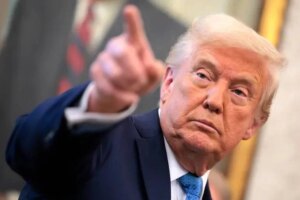
The issue of Chinese-Iranian relations tops the agenda of the upcoming summit, Thursday, in Washington between US President Donald Trump and his Chinese counterpart Xi Jinping. This comes against the backdrop of a news report that revealed the continued flow of shipments containing dual-use Chinese components to the Iranian Ministry of Defense.
The Wall Street Journal reported, based on an analysis of Iranian customs data, that about 1,300 shipments containing “dual-use” components arrived from China to the Iranian Ministry of Defense, in the period from the beginning of this year until the end of June.
The newspaper explained that one of these shipments, which included electronic components suitable for manufacturing parts for drones and missile guidance systems, arrived in Tehran on the same day that Beijing announced its efforts to reduce the escalation between Washington and Tehran. This was followed, just two days later, by data showing the arrival of more than 12 additional shipments worth more than $6 million, which are used in the manufacture of drones.
Although the dual nature of these components is not in itself conclusive evidence of their allocation for military purposes, customs data – according to the newspaper – identified the Iranian Ministry of Defense as the recipient.
These data place the Iranian file at the forefront of Trump and Xi’s discussions during their second summit this year, at a time when the two capitals are seeking to manage broad controversial files that include trade, the Taiwan issue, artificial intelligence, and rare metals.
China is Iran’s most prominent trading partner, especially in the energy sector. Reuters estimates that about 90% of Iranian oil exports go to the Chinese market, making it the main source of Tehran’s financial revenues.
In the same context, voices are rising within Washington demanding that the Washington summit be used to pressure Beijing regarding its relationship with Iran. Democratic Senator Jeanne Shaheen urged President Trump to ask his Chinese counterpart to stop what she described as “Chinese economic and military support for Iran,” noting the involvement of Chinese and Hong Kong companies in supplying components used in the manufacture of Iranian ballistic missiles and drones.
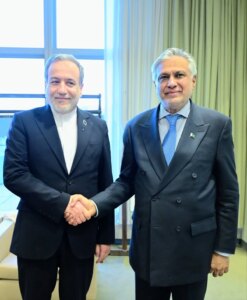
On the other hand, Beijing is keen to present itself as a mediator to reduce the escalation. The Chinese Foreign Minister, Wang Yi, had previously called, during talks with his Iranian counterpart, Abbas Araghchi, on both Washington and Tehran to exercise restraint, return to the temporary understanding concluded in June, and resume diplomatic consultations.
The Chinese President is heading to the summit while his American counterpart seeks to maintain the stability of bilateral relations and achieve economic gains, which puts the American administration before a complex equation that balances pressure on China in the Iran file and avoiding opening a new front of tension with the second largest global economy.
Thus, Chinese support for Tehran emerges as one of the most sensitive issues on the negotiating table, along with trade and Taiwan issues, in light of the continuing conflict and Washington’s constant endeavor to dry up foreign resources that enhance Tehran’s ability to continue the confrontation.