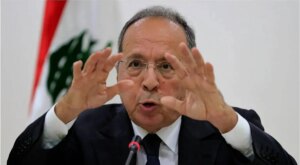
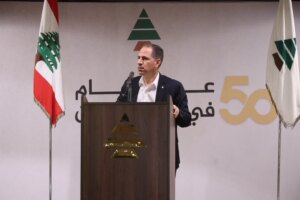
The farewell ceremony for the former MP and honorary president of the Liberal Patriots Party, Dori Chamoun, constitutes a prominent national event in Lebanese political life, amid a wide political and popular presence. However, the absence of the head of the “Lebanese Forces” party, Samir Geagea, and his wife, MP Strida Geagea, from the burial and condolence ceremonies raised wide question marks, especially since the deceased was not a distant figure from the “Forces”, and his son Camille Chamoun is considered an active member and representative in the “Strong Republic” bloc.
This absence acquires a remarkable humanitarian and political dimension, given the historical position taken by Dory Chamoun in 2000 regarding the issue of the killing of his brother Danny and his family. He declared at the time that he did not know the real perpetrator, stressing that if he were 100% certain of Geagea’s responsibility, he would ask for his prosecution, and he questioned the circumstances of managing the file and the timing of reopening it politically. Although Chamoun did not grant Geagea a judicial acquittal, he refused to use his brother’s blood for the purposes of settling political scores, and dropped certainty about the story on which Geagea was convicted during the tutelage era.
In light of these facts, observers considered that the moral and political duty required Geagea to be present in person to shake hands with his ally son and stand by the family. In response to the justifications based on security concerns, the facts indicated the presence of prominent figures such as the President of the Republic, Joseph Aoun, and Gebran Bassil. The report pointed out that Samir and Strida Geagea participated last summer in three weddings, which included the wedding of Maroun Khadra’s daughter in Mehreen (Jbeil), the son of the owner of the Engineering House from the Al-Shaer family in Faqra, and Joseph Abu Jaoude’s son in the Monastery of Our Lady of the Castle (Beit Mery), wondering about the standards that make movement safe on ceremonial occasions and turn into a security risk at the funeral of a political ally.
The head of the “Lebanese Forces” party contented himself with issuing an obituary statement in which he praised the moral character of the deceased, but those words were considered insufficient to compensate for the lack of loyalty at the moment of farewell to a man who left a clear imprint on the path of the sovereign opposition, and stood by the “Forces” at delicate historical junctures.