“Lebanon Debate”
American calls for Syrian intervention against Hezbollah in Lebanon raised the possibility of restoring a historical model that the region experienced in the 1970s, when the Palestine Liberation Organization found itself between Syrian military pressure from the north and east and Israeli advances from the south.
According to a reading published by the Saudi magazine Al Majalla, the talk is not about a literal reproduction of the past experience, but rather about employing some of its mechanisms within a new regional reality, based this time on the contradiction between the new Syrian regime and Hezbollah, in parallel with the ongoing Israeli military operations against the party in Lebanon.
According to the magazine, Washington views Hezbollah as the most prominent expression of Iranian influence in the Levant, while it deals with the new Syria as an arena capable of repositioning within the emerging regional equation. Hence the hypothesis of encircling the party through two parallel paths: Israeli from the south and Syrian from the east.
This perception is based on an experience whose features began in 1976, when the Syrian army entered Lebanon with a regional and international green light, before Israel implemented the “Litani Operation” in 1978 with the aim of pushing Palestinian fighters north and establishing a security belt on the border. This equation placed the PLO between two forces moving from two different directions, and contributed to redrawing the political and military map of Lebanon for decades.
But the magazine points out that the Syrian-Palestinian relationship at that time was not based on a fixed alliance or hostility, but rather was characterized by pragmatism and a struggle for influence. The Syrian forces clashed with the Lebanese National Movement and the Palestinian factions, and participated in managing the operations that ended with the fall of the Tal al-Zaatar camp, before the assassination of Kamal Jumblatt in 1977 weakened the political and military environment surrounding the Palestinian presence and strengthened Damascus’s ability to manage Lebanese balances.
With the Israeli invasion in 1982, the interests of Syria and the Palestinians intersected in confronting Israel, but within Syrian calculations linked to Hafez al-Assad’s fears that the occupation of Beirut would open the road to Damascus. After the departure of Palestinian fighters to Tunisia, the balance shifted again in Syria’s favor, before the dispute erupted in Tripoli in 1983 and ended with Yasser Arafat’s expulsion from the city.
Despite the similarity that may suggest the return of the “pincer strategy,” fundamental differences emerge between the two stages. The current Syrian army does not have the organizational structure and ability to deploy and control that the previous Syrian army enjoyed, and any movement inside Lebanon may require the support of local Lebanese forces, with the security risks it carries and the potential for chaos and penetrations that may threaten the supply lines and rear areas of the Syrian forces.
The Turkish factor is one of the most prominent elements of difference. Ankara is the main supporter of the new Syrian army and participates in its training and rehabilitation, but that does not necessarily mean that it is ready to give it political and military cover to intervene in Lebanon. Turkey is trying to avoid engaging in a proxy war with Iran, while being keen to prevent Israeli expansion in Syria and maintain its relationship with the administration of US President Donald Trump.
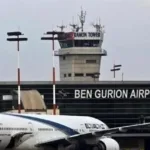
In this context, the Israeli bombing of Abu al-Duhur Airport in Idlib gained exceptional importance. Al-Majalla believes that the location of the airport, relatively close to the Turkish border, gave the strike a dimension that went beyond the direct military target, and turned it into a message addressed to the Turkish President Recep Tayyip Erdogan and the Syrian President Ahmed Al-Sharaa.
Israeli leaks showed that the eight raids targeted attempts to rehabilitate the Syrian Air Force with Turkish assistance, while the office of Israeli Prime Minister Benjamin Netanyahu confirmed that Israel will not allow a Turkish military presence to threaten it inside Syria. An Israeli official also acknowledged that Tel Aviv had previously shared information with Washington regarding the strike.
The magazine does not rule out that the raids also put pressure on Damascus to push it towards a more advanced position against Hezbollah, especially in light of information about the concepts that Al-Sharaa presented to Trump, based on strengthening military deployment on the Syrian borders with Lebanon and Iraq, to prevent the transfer of weapons to the party through Syrian territory.
However, the question remains as to whether Washington is content with tightening border controls and cutting off supply lines, or is it seeking a Syrian role that goes beyond that to direct involvement in confronting the party inside Lebanese territory.
This scene coincides with Iran’s transition, according to the magazine, from a defensive strategy to an offensive one, the features of which appeared in the movements of its allies in Yemen and Iraq, in an attempt to shuffle the cards and break the American economic blockade imposed on it.
Leaks reported by the magazine indicate that Tehran informed regional capitals, including Ankara and Riyadh, that it may target strategic sites inside Syria if Damascus decides to intervene against Hezbollah or against the Iraqi factions allied with Iran. Data also speak of Iranian build-up inside Iraq and the transfer of Afghan fighters there in anticipation of military developments related to the Syrian arena.
As for Hezbollah, which during the past months was subjected to Israeli strikes targeting its military structure and leadership, its ability to open a new front against the Syrian army remains in doubt. Despite talk of sending reinforcements to the Bekaa and the Lebanese-Syrian borders, the transition from defensive deployment to a pre-emptive attack requires different military capabilities and field conditions.
The outbreak of a confrontation between the party and the Syrian army would put Israel before new options, between being satisfied with expanding its operations inside Lebanon or providing political and military cover for the Syrian forces. However, if Iran carries out its threats and attacks sites inside Syria, the conflict will transform from a confrontation over Hezbollah’s supply lines to a battle over Syria itself.
Then the American umbrella surrounding the new Syrian rule will be subjected to an unprecedented test, while any Iranian attempt to confuse Damascus may prompt a number of regional capitals to provide it with greater political and military support. Israel may also find itself forced to review its calculations and accept indirect coordination with the Sharaa regime under American auspices, despite its continued wariness of the Syrian army.
The Saudi “magazine” concludes that the Lebanese-Syrian border may turn into a line of contact between a regional and international project that seeks to stabilize new balances in the Levant, and an Iranian project that attempts to prevent the collapse of Tehran’s network of influence.
Accordingly, the question is no longer limited to the possibility of the Syrian army returning to Lebanon or its involvement in a confrontation with Hezbollah, but rather expands to include the possibility of the return of the conflict over Syria and its transformation once again into an open regional and international battleground, at the heart of the battle to reshape the Middle East.