“Lebanon Debate”
The Lebanese government is moving to review the restrictions imposed on more than 621,000 Syrians, and to allow the ban to be lifted for a wide segment of them, especially those with administrative violations, in a step that comes within the framework of reorganizing the relationship with Damascus.
According to the information, this file came under the direction of Prime Minister Nawaf Salam, and the follow-up of Deputy Prime Minister Tariq Mitri, while the Director General of Public Security, Major General Hassan Shuqair, expressed his reservations about removing this large number of restrictions within a short period, based on security considerations and the sensitivity of this file.
The government proposal is based on distinguishing between administrative violations, such as residency, work, and illegal entry, and between criminal and security files, while maintaining the restrictions imposed on those who commit serious crimes. Therefore, the decision does not constitute a comprehensive lifting of the ban, but rather a re-examination and classification of the files, amid a discrepancy between the government approach and security reservations.
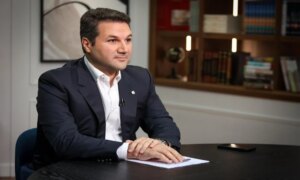
However, this matter raises more than a question mark, especially in light of the country’s current reality. In this context, writer and political analyst Ghassan Rifi, in an interview with Lebanon Debate, believes that “it is surprising that the ban has been lifted for such a large number.”
Rifi says that the direction of the Lebanese authority has become clear, wondering about the feasibility of taking this step at a time when it “releases about 300 Syrian people from prisons and hands them over to their leadership, and at the same time lifts the ban, while the situation in the country is not comfortable at all, neither on the security nor social levels, nor even in light of the continuing Israeli aggression.”
He added: “Today we are a country facing aggression and war, and lives are being lost. Under these circumstances, there should be, at least, a measure of peace of mind, security and stability, and that those who enter cities should be under the security microscope, and that they should be monitored in a way that allows the security services to be informed and aware of what might happen, in case someone wants to carry out any action.”
Rifi considers that taking decisions of this kind in light of these “pressure military, security, economic and social” circumstances raises big question marks, saying: “To take impromptu decisions of this kind makes one unable to understand whether the Lebanese authority is under pressure from the outside, or whether it wants to normalize the relationship with the new Syrian leadership, or whether it seeks to appease it, and for what reason it wants to appease this leadership, or whether there is a plan with different dimensions that the outside wants to carry out in Lebanon.”
Rifi describes the step as “incomprehensible, especially since it is urgent,” stopping at the deadline set for General Security. He says: “General Security was given one month to complete the lifting of the ban on 621,000 people. This urgency is strange.”
It also raises questions about the decision-making mechanism: “Was this decision taken within the Council of Ministers? Was it taken at the security level, individually or in any way? Then, for those on whom the ban was imposed, were the Lebanese not supposed to know why the ban was imposed on them in the first place, and why it was lifted from them?”
Rifi criticizes what he describes as the ambiguity surrounding the work of the Lebanese authority, saying: “Unfortunately, the Lebanese authority today acts as if it is working in secret, in the shadows, and under ambiguity, while the ruling is not like that. The ruling is clear, and the ruling is open and frank to the people, who are affected by any kind of security chaos that any decision could cause.”
Rifi concludes by saying: “Therefore, no one can understand what this authority wants, who it follows, from whom it receives its orders, and whom it wants to please, but there is no doubt that everything it does is at the expense of the Lebanese people, and perhaps against the interest of the Lebanese people; from the negotiations to the smallest decision it takes today, it is not in the interest of the Lebanese people.”