“Lebanon Debate”
A diplomatic source following Lebanon Debate revealed that the Lebanon front has entered the most dangerous test since the June understandings, warning that the situation is no longer a “stable truce,” but rather has become closer to a fragile security system that could collapse with the first major miscalculation.
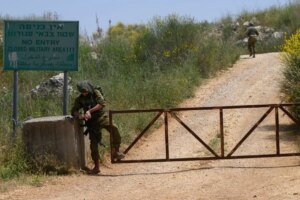
The source explained that the Israeli raids on Ansar, Deir Al-Zahrani and the vicinity of Nabatieh, which resulted in the death of 11 martyrs, including 3 children, carried a message that went beyond responding to the targeting of an Israeli force on Ali Al-Taher Hill and the wounding of 3 soldiers. Israel wanted to confirm that the ceasefire negotiations would not prevent it from using force whenever it considered that its forces were exposed to danger.
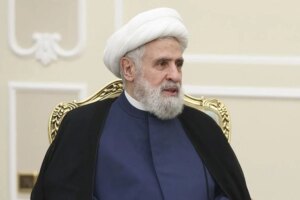
On the other hand, Hezbollah’s announcement that the attacks will be met with an “appropriate response” puts the region in front of very sensitive times. According to the source, the question is no longer whether the party will respond, but rather where the response will be, what its size will be, and will it cause Israeli deaths?
He pointed out that the most likely scenario is for the party to carry out a calculated response against a military site, followed by a harsher Israeli response, before Washington intervenes to reset the field. But the fall of Israeli deaths, or the confrontation moving to the settlements and the Israeli depth, may push Tel Aviv to expand its strikes towards the Bekaa or the southern suburbs.
The diplomatic source pointed out to “Lebanon Debate” that there are no public indications proving that a decision has been taken for a comprehensive war, as no exceptional preparations or widespread Israeli mobilization have appeared so far. However, the presence of Israeli forces inside Lebanese territory makes any drone or device capable of igniting a cycle of mutual responses.
As for the negotiations, they are still in place, but they face a clear complex: Israel wants to disarm Hezbollah and verify it before withdrawing, while Lebanon demands that it stop the raids and withdraw to enable the army to deploy and implement its obligations.
The source concluded by saying: “There is no declared decision for war, but there is no real guarantee to prevent it. If the response remains under the ceiling of military sites, the escalation can be contained. But if it crosses unwritten lines, the fire may turn from a negotiating tool into a new war.”