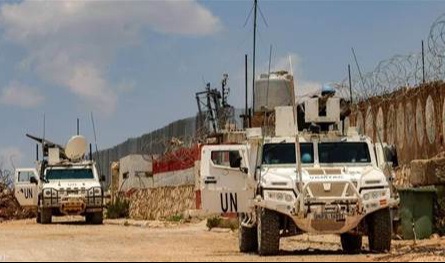
Official and popular Lebanon did not understand the American position rejecting in principle the extension of the state of the international emergency forces operating in the south, which was assigned by the two decisions issued by the UN Security Council 425 and 426 in 1978, 47 years ago.
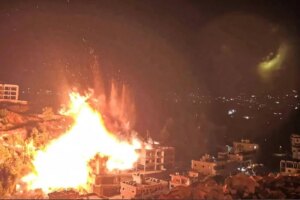
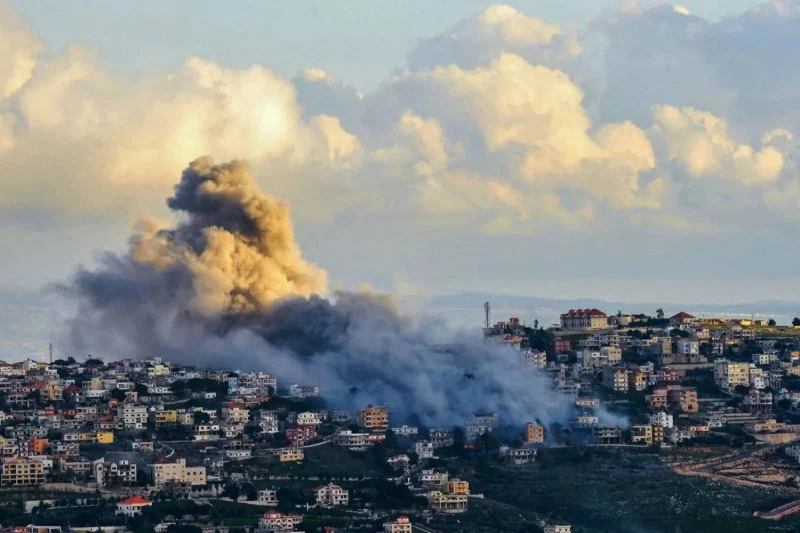
These forces are renewed annually for the forty -sixth time in a row, and they have become due to their technical and symbolic existence in more than one southern region as an integral part of the Lebanese fabric in its southern version, and that was what he grew up and the people of the south from the relationship of friendly and mutual respect except for some incidents, which these forces were exposed to, and still, as a translation on the ground by “Hezbollah,” What he wants through some of the acts of security and security attributed to the people, he wants direct messages to the international community about the delay of these forces to play the role required of them in terms of standing in the face of repeated Israeli attacks, which did not provide these attacks during the last war a number of UNIFIL headquarters, especially the headquarters in the town of Naqoura.
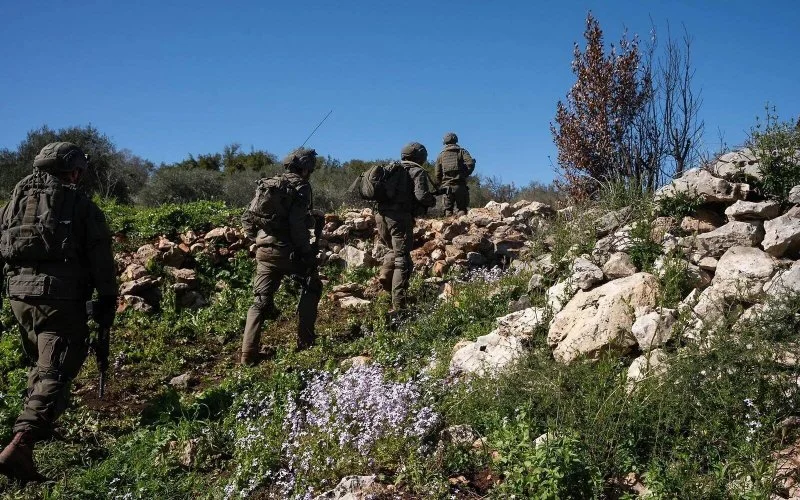
The Security Council has assigned these forces to secure the full Israeli withdrawal, restore stability to southern Lebanon, and to help the Lebanese state to extend its authority in the region subject to the influence of these forces, which remained, and despite the major transformations that Lebanon and the region have witnessed since that date, a Lebanese need is indispensable, especially in moments of commitment and congestion on the border.
It is true that the “UNIFIL” forces do not have a magic stick to defuse the conflict or to change the rules of engagement that have been prevalent for years, and before Israel moved to an open confrontation war with “Hezbollah” nearly a year ago, on the pretext that it supported the Palestinians of Gaza to defend their presence. But it is also true that these forces remain the only international guarantee not to turn the south into a loose square than they are today, where regional accounts between Israel and Iran are filtered.
Although Lebanon does not understand the American position, more than one diplomatic source confirms that this position on the extension of the “UNIFIL” forces is not new, as Washington has always been negative or hesitant at more than one station. For the American administration, whether democratic or republic, these forces are “unnecessarily necessary” forces, because they have proven their inability to prevent “Hezbollah” from spreading in the areas, which were supposed to be subject to its control and influence. This deficit prompted the “party” to expand on a field, and to establish its war arsenal, “on your eyes, merchant.” This matter contributed to making its role closer to the negative observer.
In a Lebanese moment that is the most difficult, where the border between Lebanon and Israel is unstable, the United States chooses to raise the reservation stick and the financial compressor in the face of extension of these forces, and it is known before others that it is not a party to the existing conflict, but rather an international umbrella. However, she deals with it as if it is a burden on it or a bargaining paper in the game of tightening the ropes with “Hizbul”.
On the other hand, Lebanon, which lives a stage that may be the most dangerous for many years. Its southern borders are open to the possibilities of escalation, while internal stability is fragile and political vacuum deepens. In such a difficult circumstance, the presence of “UNIFIL” becomes a necessity not a luxury, especially as it plays a double role: it is first a balance element and a deterrent message to Israel, and secondly a field bond of army in controlling the land and containing tensions.
If Washington is truly eager to stabilize Lebanon and prevent its slippage to chaos, it is supposed to be the first supporter to extend these forces, activate their powers, and provide them with the necessary capabilities.
As for Lebanon’s position on these forces, it is represented by its refusal to be a place of bargaining or pressure card. Rather, its presence in this delicate and disobedient stage is a sovereign need and a national necessity.
In this context, it was revealed that the President of the Republic, General Joseph Aoun, presented a political -security reading in front of the American delegation, in which he explained the need to extend to “Lyonneville” without changing its tasks and many, starting from several considerations, the first of which is that the army completes its deployment in the south, and he needs to support those forces and their presence, and secondly its presence gives Resolution 1701 the required international care, and thirdly, the need of citizens in that region in that region To the social, health and humanitarian services provided by the “UNIFIL” forces, especially in light of the destruction left by the recent war, and the stumbling of reconstruction.
The post UNICEF is a Lebanese need, and it is not necessary for what is not an American appeared first on 961 tobay Lebanon today.