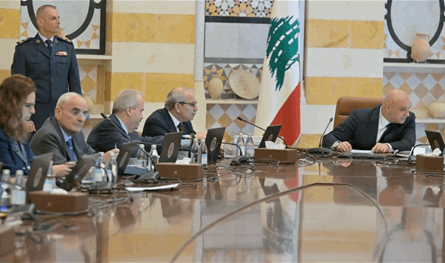
It is clear from the overall political developments in recent weeks that the dispute between the presidency of the Republic represented by President Joseph Aoun, and the presidency of the government represented by President Nawaf Salam, is no longer just a variation in views or a natural difference in approaches, but rather turned into an open political conflict that threatens the exact balance in the executive authority, and is cast a heavy shadow over political life in the country.
This disagreement reached its climax after the events in the Rawsha Rawsha region, which constituted a detailed turning point in the relationship between the two men, as Salam was clearly felt that the president of the Republic was behaving with a logic aimed at taking into account the Shiite party in the political equation, even at the expense of the government presidency and its powers. Its separation from a wider context of accumulations and disputes. The issue was not only in the management of that incident, but also in the political approach to the President of the Republic, based on providing sectarian and political balance accounts at the expense of the concept of the state and the position of the prime minister in the system. This matter sparked peace of peace, which considers himself a representative of the executive authority and the first responsible for the administration of the country’s daily affairs, but the Raouche crisis is nothing but the head of Jabal al -Galaid. The most sensitive file between the two parties remains how to deal with the weapon of Hezbollah and its role at home and abroad. While Salam appears a tendency to put this file from the corner of the state and its monopoly to use power and organize its relationship with all armed forces, Aoun prefers that this issue remains outside the direct political confrontation, justifying that entering into a clash with the party may destroy the remaining era and open the doors of crises that have no ability to bear it. This deep contrast in the vision made the relationship between the two men more complicated It was lost by the minimum harmony required to manage the stage. Another factor is in addition to that of no less important, which is the conflict over the powers between the two presidencies. President Aoun seeks, according to what is conveyed, to exercise broad political influence that exceeds what the Taif Agreement gave him, so that his role approaches the role that the President of the Republic was approaching before the constitutional amendments. On the other hand, Salam adheres to his right to be the “leader of the orchestra” in the political scene, that is, who controls the rhythm of the executive authority and draws the public policy lines of the government. This struggle for influence, image and role threatens to turn into a real system crisis, especially if it continues without any attempt to settle it or establish new rules for coexistence between the two presidencies. Grandfather to contain this clash, its repercussions will inevitably be reflected on political stability and the government’s ability to make fateful decisions at a stage that is one of the most sensitive in the country’s history.
The post Aoun and Salam .. There is no solution to the dispute except by consensus appeared first on 961 tobay Lebanon today.