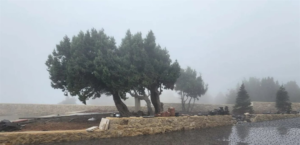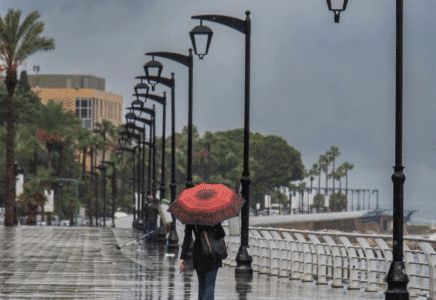
With the approaching winter, the Lebanese transmitted through social media and private councils newsIt is controversial that the country is coming to a winter “harsh that has not seen a hundred years ago.” These expectations, which are based on popular traditions such as figs, salt and “pawn”, are concerned by some, while others consider them just part of the inherited popular heritage generation after generation. However, do these popular indicators have any scientific basis?
Bayhids between inheritance and science
Father Elie Keniser, a specialist in weather and climate science in Boston, explained in an interview with “Libyan Deepite” that the recession to these traditions to determine the features of the winter season is not possible. He said: “Between science and tradition is a vast difference. Powers, salt, and fig leaves do not give an accurate reading, and the past years have proven that their expectations lack credibility. In contrast, scientific analysis based on mathematical maps and air pressure movement, and studying the status of oceans and currents, which allows for a preliminary image, albeit not exceeding 60%, about the nature of the next winter.”
Keniser pointed out that “the last year is the best evidence, as the communication sites were filled with expectations for a historic winter, but the result was completely different, as the air heights prevented 12 low reaching the eastern basin of the Mediterranean, and the percentage of fallacies decreased from its rates by about 40%.”
Climate change turns the scales
According to Kheneeser, any serious scientific study should take into account the global climate change that turned the weather scales, and he said: The climate today has become more extreme than it was 25 years ago. In the summer, we are witnessing free waves of flame, and in the winter snow falls in semi -tropical areas, and the cold is hitting the stones that are not accustomed to. These data drop any approach dependent on the popular heritage alone. ”
He pointed out that “the initial image of Lebanon and the region will not be clear before the second half of October, with the departure of the Indian depression of the Arabian Peninsula and the return of the Atlantic activity and the northern pole.”
On the weather in Lebanon in the coming days, Keniser explained that today, Sunday will be warm and relatively hot on the coast (29-30 day and 24 nights), in the mountains at an altitude of 1200 meters: the temperature between 26 and 27 day and 18 nights, while in the Bekaa: 30-31 day and 17 nights.
As for the middle of the week from Tuesday to Thursday, the heat will decrease about 3 degrees with the possibility of separate and rapid rains, to return to rise again between Friday and Sunday, in a phenomenon described as “the second summer between Tishreen and November”.
In conclusion, Keniser stressed that “what is circulating about a winter has not been witnessed by Lebanon for a century that is not based on firm scientific foundations, but rather to popular traditions that are no longer consistent with the reality of climate change.
The post Lebanon is in front of a harsh winter that has not seen it for a century. appeared first on 961 tobay Lebanon today.