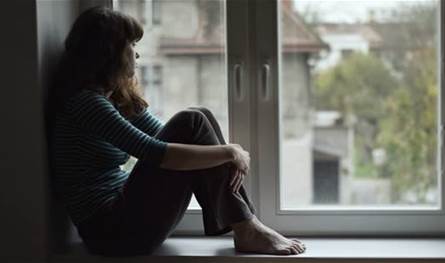
Since the Korona pandemic that invaded the world in 2020, the Lebanese have found themselves trapped inside their homes due to closing and quarantine procedures. Isolation at that stage was compulsory, imposed by fear of infection and anxiety from silent death behind the walls of hospital. With the passage of time, social spacing turned into a new reality that changed the patterns of relations and meetings, and brought society into a cycle of unity and psychological disorder.
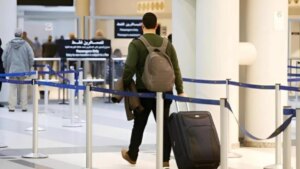
But the Lebanese, who was preparing to get out of the tunnel of the epidemic and the gradual return to his social life, was surprised by the 2023-2024 war that swept his diaries and reproduced isolation fiercely and more severely. After the quarantine, the security and living stone came, where the forced displacement, the interruption of roads, the fear of bombing, and the obsession of losing safety at any moment. Thus, people moved from a temporary isolation caused by a global pandem
At the time of Corona, the fear of the virus was imposing spacing, closing schools and universities, and the events and gatherings stopped. There are no longer weddings or expanded family meetings, and screens are the only way to communicate. With the approach of the epidemic, people thought that life would return to normal, but the war turned the table: displacement of villages and cities, closing of institutions, interruption of electricity and communications, and death that looks out of the sky at any moment. The result of the isolation of the injured.
Repeated isolation leaves his heavy mark on mental health. Anxiety and depression has become part of the diaries of many, while others live repeated shocks that exceed their ability to endure. Unity, in addition to people who were suffering from psychological problems before the war, all of them have become more likely to collapse. These live a double isolation, as their psychological structure is more fragile than others. The decline in social ties
Social occasions have declined unprecedentedly. The weddings are rare, shy religious celebrations, and even festivals lost their luster. The Lebanese family no longer meets as before. The continuous fear and the difficult economic situation have emptied the meetings of their meaning. On the other hand, many resorted to social media to compensate for the human vacuum. However, these means did not succeed in filling the gap, because it lacks the intimacy and passion that characterizes realistic meetings. The second is to close and content with a very narrow circle, in order to preserve the minimum safety.
The crisis was not limited to shocks and fear, but rather extended to the economic side that doubled the isolation of individuals. Participation in any social activity needs a minimum level of material capabilities, which is no longer available to most Lebanese. High prices, unemployment, and the collapse of the currency made the exit to a restaurant or participation in a suitable welfare is a relatively difficult. With the increasing waves of immigration, many have lost their friends and members of their families, which left them in front of a greater social vacuum. Social isolation after Corona and the war is not a passing situation, but an extended crisis that may leave its effects for many years and perhaps in full generations. Restoration of relationships requires time, effort and institutional support, as well as civil initiatives that restore confidence and create safe spaces for meeting and interaction. The Lebanese today need beyond the reconstruction of buildings and roads; They need the reconstruction of social ties that were broken under the weight of crises. The future, despite the darkerness of the present, still deserves to live with others, not in a brutal isolation imposed by fear or poverty.
The post Social isolation .. from Corona to war appeared first on 961 tobay Lebanon today.