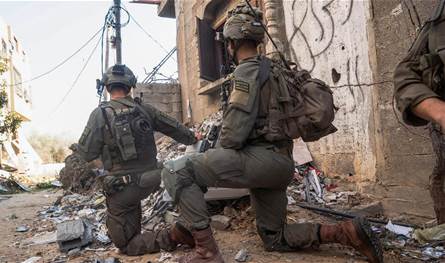
A new survey in Israel revealed that the majority of Israeli soldiers talk about the need to end the ongoing war in the Gaza Strip since October 7, 2023.
This poll, conducted by the “Agmin” institute, included soldiers from the regular army and reserve, revealing that 63% of the soldiers support a ceasefire agreement that includes a prisoner exchange between the “Ham” movement and Tel Aviv.
And the survey indicated that 40% of the soldiers feel a decrease in their incentive to continue fighting in Gaza, while 64% believe that the war is managed for political reasons.
The survey results reflect a similar position among the general Israelis; About two -thirds of whom see that the war carries political motives, and about 74% of them support the end of the conflict and negotiation of the prisoners ’exchange, and even between the Likud party voters, 54% supported the end of the war in a deal to exchange prisoners, according to the poll.
Of the 251 people who were held hostages and were transferred to Gaza in the 2023 attack, 49 are still in the Strip, and the army said 27 of them died.
Severe division
This survey coincides with a sharp and unprecedented division within the Israeli Chiefs of Staff, centered on the strategy and timing of the Gaza City invasion, noting that it is not a political dispute, but rather a conflict between two military schools over the best way to achieve the goals of the war, especially with regard to the file of detainees.
At the head of the first school, the Chief of Staff, Eyal Zamir, who prefers a partial exchange deal, while calling on a group of senior military leaders to “seize the momentum” and occupy the entire city and quickly and quickly, to impose the conditions of the Israeli government on “Ham”.
Nevertheless, “Yediot Aharonot” says that the Chief of Staff Zamir believes that moving forward in a partial deal for detainees now may avoid the Israeli army that Gaza must be fully occupied, or at least postponing it, and his plan is to follow a gradual approach, starting to impose a full siege on the city, then move to the evacuation of the residents, whose number is estimated at about one million and a quarter of a million people, before the start of any ground operation, and then, and after that, it will be The implementation of a violent military maneuver, but it is limited in areas that confirm intelligence information, free of any detainees.
Zamir believes that this method is the best to preserve the lives of the hostages and reduce the losses among the army soldiers, especially in the reserve forces, and his plan includes the introduction of humanitarian aid to the sector, with the aim of restoring the international legitimacy that Israel has almost lost, and although the chief of staff’s plan seems cautious and logical, its main disadvantage is that it requires a very long time, may reach a year, and does not guarantee imposing continuous pressure on Ham, according to the newspaper.
In contrast, the field leaders believe that the slowdown in decision -making is the biggest strategic mistake, as they assert that any partial deal will eliminate the huge momentum that the army currently enjoys, and gives “Ham” an opportunity to capture its breath and reorganize its ranks.
Likewise, intelligence reports indicate that Hama takes the threat of invasion seriously, and that it is looking for any way to avoid it, which makes this moment the most appropriate to impose Israeli conditions. (24)
The post Inside Israel .. What do soldiers say about the Gaza war? appeared first on 961 tobay Lebanon today.