Iranian Deputy Foreign Minister Kazem Gharibabadi revealed that the first meeting of the team monitoring the implementation of the memorandum of understanding was held in Doha, in the presence of an Iranian, a Qatari, and a Pakistani, noting that Tehran raised during it what it described as violations by the United States of its obligations under the first clause of the memorandum, related to ending the war in Lebanon.
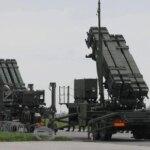
Gharibabadi said that the Iranian side discussed with the delegations of Qatar and Pakistan reports related to the strengthening of American forces in the region, in addition to the threats issued by Washington, stressing that the obligations of the memorandum of understanding constitute an “integrated group” whose provisions cannot be dealt with separately.
Regarding the financial file, the Iranian Deputy Foreign Minister explained that the Iranian delegation discussed with Qatari officials issues related to spending part of the $6 billion of frozen Iranian assets, noting that it was decided to use part of these funds to purchase goods based on Iran’s needs.
He also announced that it was decided to establish an urgent communication channel for a team monitoring the implementation of the terms of the memorandum of understanding by tomorrow, in a step that reflects an attempt to install a direct follow-up mechanism between the parties concerned, and prevent disputes over implementation from turning into a new reason for escalation.
These statements come at a sensitive moment in the Doha talks, as the Lebanon file overlaps with other regional files, most notably the Strait of Hormuz and frozen Iranian assets. The inclusion of the clause on ending the war in Lebanon within the Iranian monitoring mechanism reflects that Tehran is dealing with the Lebanese arena as an essential part of the memorandum of understanding, not as a side file or separate from the broader path of calm.
Iran’s linking of the implementation of financial, security, and political provisions indicates its desire to prevent selective commitments, and to press toward a comprehensive approach that includes halting escalation, controlling American military movements, and addressing the frozen funds file, in addition to stabilizing the path related to Lebanon.
The urgent communication channel that was decided to be established is of particular importance, because it may constitute a tool to quickly contain violations or objections, especially in light of the fragility of the understandings and the presence of more than one flammable arena, from southern Lebanon to the Strait of Hormuz.