Despite the ongoing Israeli war on Lebanon, and the stifling financial and economic crises that are putting pressure on state institutions, the Council of the South continues to perform its relief and humanitarian role to support displaced families from southern Lebanon and the southern suburbs, in an attempt to alleviate the extent of suffering and secure the minimum requirements for resilience in one of the most difficult stages that the Lebanese are experiencing.
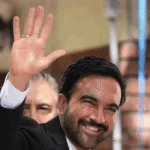
In this context, the President of the Southern Council, the President of the Lebanese Football Association and the Vice-President of the Asian Confederation, Engineer Hashem Haider, confirmed that the Council took action from the first moment of the displacement wave, putting all its capabilities at the service of the affected families, in coordination with the official authorities and bodies concerned with managing the crisis.
Haider said in an interview with Al-Anbaa that “the humanitarian and national duty imposed a rapid response in light of the difficult circumstances that the Lebanese lived through,” noting that the Council benefited from the presence of quantities of mattresses, pillows, and blankets inside its warehouses, which allowed it to move immediately to accommodate the first wave of displaced people, before moving on to purchasing and securing more basic needs.
He explained that the aid started from shelter centers in the south, then expanded to include various Lebanese governorates, in addition to displaced families residing in homes, in addition to supporting villages and towns that were subjected to bombing and attacks.
He added: “We, along with various state departments, are working within the framework of disaster management and under the umbrella of Prime Minister Nawaf Salam, to ensure the best possible response to the humanitarian crisis.”
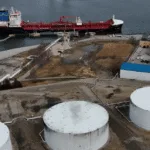
Haider revealed that the Southern Council has so far provided about 200,000 food rations to displaced families, and is still continuing to provide aid according to available capabilities, pointing out that about 8 million and 200 thousand liters of diesel have been purchased from oil facilities in Zahrani and Tripoli, and were distributed in coordination with the Ministry of Energy to shelter centers to provide heating and lighting.
He also pointed out that the Council provided water stations with fuel to ensure continued pumping of water to the villages and towns hosting the displaced, in addition to supporting a number of municipalities with gasoline to operate generators and extend lighting networks inside shelter centers and for displaced families residing in homes.
He stressed that this effort included various Lebanese regions, in cooperation with local and international institutions and associations, in addition to the displacement crisis management committees and cells, praising in particular the cooperation with the central crisis cell in Iqlim al-Kharroub, which, according to him, contributed to providing effective relief and logistical services, along with the Jezzine regions and other Lebanese regions.
Regarding the next stage, Haider explained that the Southern Council’s plan is linked to the available financial capabilities, saying: “As long as there is displacement, we will remain alongside our people and provide them with what they need despite the financial difficulties that the Council is suffering from.”
He added that the government promised to secure part of the funding necessary to continue relief services, noting that the Southern Council did not receive any direct external support, as international aid and donations are transferred to the Higher Relief Commission, which distributes them through the governors.
He pointed out that the volume of foreign aid this time was limited compared to what the country witnessed during 2024.
Haider stressed that the greatest challenge will begin after the attacks stop and stability returns, with the urgent need for reconstruction and securing the return of people to their villages and homes, stressing that the extent of the damage to infrastructure, private property, facilities and machinery is “very large,” while the state’s capabilities alone are not sufficient to bear this burden.
At the conclusion of his speech, he called for an Arab and international stand of support, especially from Arab countries and friendly countries, to contribute to the reconstruction of what was destroyed by the war and to help the Lebanese people restore their normal lives.