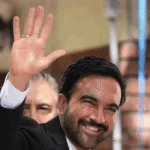
The distinguished Jaafari Mufti Sheikh Ahmed Qabalan affirmed that “nothing will save Lebanon except its unity, solidarity, and the restoration of the state’s national role,” attacking the Lebanese authority against the backdrop of the results of the announcements related to direct negotiations between Lebanon and Israel under American sponsorship.
Qabalan said, in a statement, that he does not trust “the current authority installed by the American shepherd who is overwhelmed with Israel’s support,” considering that this authority “is only interested in the chairs in Lebanon,” as he put it.
He accused the authorities of “suffocating the south, the suburbs, and the Bekaa financially, in relief, and in security,” noting that what is happening is putting the country in the face of “a sectarian crisis reminiscent of Lebanon’s most dangerous crises and civil war projects.”
He also considered that “the Lebanese state buys security from Israel by disrupting civil peace,” warning of the danger of “opening a security path between the Israeli army and the Lebanese army,” which he saw as aiming “to disarm the resistance and prevent any sovereign force that conflicts with Israeli hegemony.”
Qablan pointed out that US Central Command Commander Brad Cooper was “clear” in his talk about supporting the Lebanese army to confront Hezbollah, considering that this constitutes “targeting the entire Shiite community,” as he described it.
He added that Lebanon “is facing an American project that works to Zionize Lebanon or push it toward civil war,” calling for “the biggest political battle” to prevent what he described as “invading strife.”
He stressed that “internal stability is linked to the state’s choices,” warning that “any mistake in the country’s choices means ruin,” and considering that “Lebanon’s strength lies in its unity, internal partnership, and defense strategy.”
Qabalan’s positions come in light of the escalating political division in Lebanon over the ongoing negotiations with Israel, the extension of the ceasefire, and the role of the resistance and its weapons, amid mounting fears of the repercussions of the internal division on civil peace and political stability.