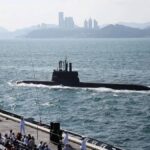
In a remarkable escalation in American positions, US Secretary of State Marco Rubio announced that his country will not allow Iran to control the Strait of Hormuz, stressing the continuation of efforts to restore freedom of navigation and secure international shipping in this vital corridor.
Rubio said that closing the Strait of Hormuz is considered a “piracy operation,” stressing that the United States “will continue to clean the Strait” of threats, referring to mines, speedboats, and drone attacks.
He revealed that American forces destroyed 7 Iranian speedboats in the strait, stressing that Washington “only responds to Iranian boat attacks and marches,” in light of the escalation of the naval confrontation.
He pointed out that the blockade imposed on Iran is costing it about $500 million a day, considering that “pressure is increasing day by day” on Tehran, at a time when the Iranian leadership is suffering from “division,” as he put it.
In the context of international action, Rubio announced that his country had submitted a draft resolution to the Security Council, in cooperation with the Gulf states, aiming to secure the Strait of Hormuz and protect freedom of navigation, and includes demands to compel Iran to stop attacks and plant mines, and reveal their locations, in addition to supporting the establishment of a “humanitarian corridor” in the strait.
He stressed that “no country is allowed to plant mines in an international waterway,” accusing Iran of trying to “blackmail the global economy” by threatening navigation and imposing fees on ships.
Regarding the Lebanese file, Rubio stressed Washington’s efforts to reach a permanent ceasefire between Lebanon and Israel, stressing the continuation of efforts to advance negotiations between the two sides.
This escalation comes at a time when the fronts from the Strait of Hormuz to southern Lebanon are intersecting, amid fears of the expansion of the confrontation, in light of the continued military and diplomatic pressure on Iran.