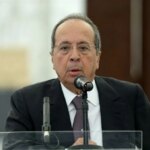
The Greek Orthodox Metropolitan of Beirut and its dependencies, Bishop Elias Odeh, presided over the Easter Mass in St. George’s Cathedral in Beirut, in the presence of a large number of believers. During the mass, Bishop Odeh launched important political positions that addressed the Lebanese situation and developments taking place in the region.
Speaking, Odeh explained that the successive crises that Lebanon is suffering from, including wars, destruction, economic collapse, and loss of confidence, are not an inevitable fate, but rather the result of wrong choices, and called for an end to what he described as “tampering with the country’s destiny.”
He also touched on the military escalation, considering that repeated wars, in the face of a “ferocious and ruthless” enemy, are being imposed on Lebanon against the will of the state and the majority of the people, leading to huge human and material losses, demanding that they stop due to the destruction, displacement and suffering they cause.
He denounced the targeting of civilians, the killing of children, and the destruction of vital infrastructure and facilities, stressing that innocent people are the permanent victims, and stressed his rejection of the “crimes and massacres” committed against them, and referred to the recent attacks witnessed in Beirut.
He also pointed out the lack of accountability for violations, questioned responsibility regarding “bloodshed, destruction of villages, and displacement of residents,” and stressed that the continuation of this situation is unacceptable.
Odeh called for an end to wars and a return to the logic of peace, stressing that stability can only be achieved by respecting human life and preserving his dignity.
Regarding internal affairs, he criticized the performance of officials, considering that the worsening crises reflect “a defect in management and decisions,” and warned of continued deterioration in the absence of real reform.
He pointed out that the economic collapse, financial waste, and loss of confidence between the state and citizens are all indicators of a deep crisis that requires radical treatment, calling on the state to fulfill its pledges and restore its credibility through actions.
He also stressed the need for the Lebanese to rally around their state to strengthen its position, stressing that Lebanon is not just a political entity, but rather carries a civilizational and humanitarian message that must be preserved.
In conclusion, he stressed that the current stage requires a change in the political approach and priorities, and prioritizing human interest over any other consideration, in light of a tense regional situation that directly affects the Lebanese internal situation.