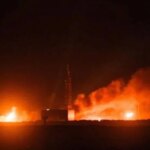
Israeli Channel 15 revealed new details regarding the fiery ambush set up by Hezbollah near the Litani River, opposite Shaqif Castle in southern Lebanon. This operation is considered one of the most prominent confrontations that the region witnessed during the first days of the battles.
According to what was stated in the report, a force from the 890th Battalion of the Paratroops Units, in addition to the “Yahloum” Engineering Unit, set off on a special mission aimed at controlling an area located on the opposite side of the river. This mission was preceded by intense preparations that lasted about 36 hours, and included preparing the necessary engineering equipment and means of transit.
The report stated that the force, while present deep in the targeted area, was subjected to intense and concentrated bombardment by Hezbollah. Dozens of rockets and mortar shells were fired towards the same location within a few minutes, resulting in deaths and injuries among the force’s ranks.
The report indicated that one soldier was killed and approximately 20 soldiers, including officers and fighters, were injured with varying degrees of injury. In light of this situation, the military operations room faced hesitation between continuing to carry out the mission or withdrawing, due to the force being completely exposed under fire.
The report explained that the scale of human losses and the loss of the element of surprise prevented the completion of the operation, which prompted the force to retreat. The Yahloum unit withdrew first, leaving behind various engineering equipment, including bulldozers and rubber boats. As for the 890th Battalion, it remained at the ambush site for a while before making a similar decision to withdraw.
After a field assessment that took more than an hour, a decision was made to stop the mission and implement the disengagement process, in order to preserve the combat capability of the force. Accordingly, the elements withdrew without recovering the equipment that was left at the site.
At the conclusion of the report, it was noted that Hezbollah later published photos and videos showing the equipment left at the site of the clash inside Lebanese territory.
This ambush comes in the context of an ongoing field escalation on the southern front, where clashes are repeated between the Israeli army and Hezbollah along the border, with limited advance attempts and focused targeting operations.
This operation reflects the nature of the current confrontation, which is characterized by rapid strikes and fiery ambushes, which increases the cost of ground operations and complicates any attempts to control strategic areas in southern Lebanon.