With the intensification of the internal displacement crisis and the escalation of living and health burdens, attention is turning to shelter centers, which have come to reflect a bleak picture of the humanitarian reality faced by thousands of Lebanese. Between the official visits and the statements of the displaced, a wide gap becomes clear between basic needs and the actual response, which raises serious questions about the ability of the concerned authorities to deal with the scale of this crisis.
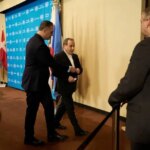
During an inspection visit to the Camille Chamoun Sports City, Minister of Health Rakan Nasser al-Din confirmed that the aim of the visit was to directly examine the conditions of the displaced, whether in terms of health or living, pointing out that the Ministry is working in coordination with the official authorities responsible for the displacement file.
Minister Nasser al-Din said: “Today we are on a visit to the Sports City to closely examine the conditions of the displaced, whether health or living in general. We come as a Ministry of Health in cooperation with the other relevant ministries, and we extend our thanks to those in charge of this edifice for hosting them, as well as to the Lebanese Red Cross, which plays an essential and major role in helping the displaced, especially at the health level. We will begin the tour to review the conditions of the people, and after it ends we will return to talk about the results and evaluation.”
During the tour, the voices of many displaced people rose, expressing their dissatisfaction with the lack of necessary aid and services, especially in the health field. One of them pointed out that medicines do not reach all those in need, and that patients are often forced to buy medicines at their own expense, despite the harsh living conditions.
Another displaced person explained that the real support on the ground comes mainly from the Lebanese Red Cross, while the official presence is still below the required level, whether in health or financial aid, stressing that basic needs are still not available.
A displaced woman strongly criticized the Minister of Social Affairs, Haneen Al-Sayed, saying, “What are you doing to address the needs of displacement?” The displaced, especially in this center, have only seen aid from the Red Cross, while the Ministry of Affairs is completely absent and does not even help the displaced on the streets.
In a moving testimony, one of the displaced people spoke about his health suffering, explaining that he is forced to go to the hospital at night due to his condition, but he does not get the required treatment immediately. He added that he is asked to wait until the morning to see a specialist doctor, which increases his pain and suffering.
He pointed out that his condition may require surgery, but the current circumstances prevent that, stressing his willingness to undergo it as soon as the capabilities are available. He added that he is from the town of Burj Al-Shamali in southern Lebanon, and that his greatest wish is to return to his home and resume his normal life and work, away from the horrors of displacement.
On the other hand, the minister stressed that the state cares about all citizens, stressing that the goal of the visit is to listen directly to the demands of the displaced and work to address any shortage or defect in the services provided.
The displaced persons concluded their interventions by emphasizing the need to transform these visits into quick, practical steps that ensure the provision of the minimum requirements for a decent life, such as health care, medicines, and humanitarian aid, away from unfulfilled promises.