With the increasing US military build-up in the Middle East, and US President Donald Trump considering various scenarios to confront Iran, analysts have warned that any potential strike against Tehran would be very complex and could ignite a long-term conflict, unlike previous operations that were considered limited and quick.
The New York Times quoted Ali Vaez, of the International Crisis Group, as saying: “There is no low-cost, easy, or clean military option available in the case of Iran,” warning of “a real risk of loss of American lives,” a factor that will greatly affect Trump’s calculations, especially in an election year.
The report indicated that Iranian leaders possess significant military capabilities, in addition to a network of allies in the region that could participate in a coordinated response to any attack. The newspaper explained that, unlike the situation in Venezuela, where the skies were open during the American operation in January, Iran possesses a diverse missile arsenal that is the largest in the Middle East, along with drones and anti-ship weapons, although the exact size of its stockpile after the June war with Israel is still unclear.
According to the New York Times, Iranian medium-range missiles can reach targets more than 1,200 miles away, including American bases in Türkiye and the Middle East. Iran is also likely to target major cities inside Israel, especially after Tel Aviv’s stock of interceptor missiles was depleted during the June war and the war in Gaza.
Sanam Vakili, director of the Middle East and North Africa program at Chatham House, said: “Tehran’s strategy is based on rapid escalation and exporting instability to multiple arenas, so that the cost and pain are distributed.” She added that Iranian officials believe that the “fear factor” of a wide regional war will make Trump think carefully before making the decision to attack.
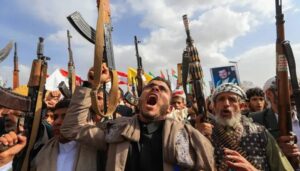
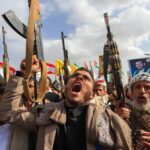
The report explained that Iran runs what is known as the “Axis of Resistance,” which includes the Houthi group in Yemen and Hezbollah in Lebanon, and Tehran worked to supply these forces with weapons to enhance its regional influence and confront its opponents. Although these groups have been damaged by ongoing wars, they are still capable of targeting US forces and their allies, which could expand the scope of the confrontation and increase its complexity.
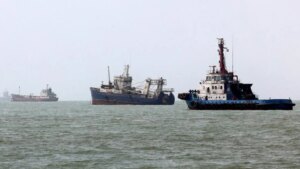
In this context, an Iranian-linked group in Iraq pledged to support Tehran if it was subjected to an American attack, while experts believe that the Houthis may resort to targeting commercial shipping traffic in the Red Sea.
While Washington was able to carry out an operation in Venezuela that took two hours and led to the arrest of President Nicolas Maduro and his wife, the newspaper believes that repeating a similar scenario in Iran seems very difficult, especially with regard to reaching the highest decision-making centers, led by Supreme Leader Ali Khamenei.
The newspaper justified this by saying, “The real power in Iran is not just a person or an institution, but rather a system driven by a well-established ideology, supported by a conservative political movement, and reinforced by complex structures that have been established over nearly half a century.” “Achieving a Venezuela-style operation would be extremely complex if the goal was to overthrow the leadership,” Vakili concluded.
These warnings come at a time when the region is witnessing increasing military escalation, with the strengthening of the American presence in the Middle East, and a return to talking about military options against Iran against the backdrop of its nuclear file and its regional role. Observers fear that any attack could lead to a multi-front regional confrontation, in which military calculations overlap with political and electoral considerations within the United States.