“Blah blah blah”… a lot of talk going on in the country. Parrots love to chatter. “His Excellency” speaks, and the “chatters” rain down a barrage of insults at him. The army commander responds to an American senator with two words, causing “hearts” to flare up with enthusiasm, and “reluctant” throats ring out with words of praise and “We are your men, Heikal.” What days the conversation changes at lightning speed. Yes, the world – in the past two days – has not calmed down with the phrases “death to America” and loyalty to an army commander who uttered two words and was asked to walk.
This, of course, is not the whole story, and “if the topic is read from its title,” the essence of the matter is: Lebanon – gentlemen – two Lebanons. What the American Senator was supposed to hear, and was expressed by Army Commander Rudolf Heikal, is said daily in the official Lebanese corridors: “Hezbollah is a terrorist.” Did he become? Since the men of the Cedar Revolution fell like birds, since the assassination of Rafik Hariri, since the killing of Samer Hanna, since Balqman Slim was tortured to death, since Joseph Sader disappeared on the airport road, the list goes on and on and on.
The army – our army – is a big story. Hezbollah is a story. Lebanon is the whole story. Let’s get started:
– Nawal Nasr
No, we will not blame Army Commander Rudolf Heikal, as the “context” in which he spoke may differ greatly from the context in which he was quoted, but one thing may be faulted for him: that he spoke about a matter that did not concern him, and he should have expected that. So what – come on – would Lindsey Graham talk to the Army Commander? About the beauty of the rice and the proximity of the sea to the mountain? Isn’t Iran – and its arms, of course – the main concern of Americans today? Aren’t decision makers in the world waiting for decisive official Lebanese steps towards the Hezbollah file, which is inflating like a balloon?
Rudolf Heckel said what he said. What next?
It goes without saying that the question asked by Senator Lindsay was clever and surprising. It is logical to say that the answer given by General Heikal was spontaneous, even if it is to say that nothing – in the corridors of politics – is spontaneous. To understand the story of the Lebanese army and politicians, we return to the history of the institution, starting from the question: Are the military good at the political game? Are they supposed to?
The soldier “Tansa” was asked in the examination for promotion to the rank of corporal: If you were behind the barricade and the enemy attacked you from the front, what would you do? With great confidence he replied: Shoot him. He was asked: What if the enemy comes to you from the right? “Shoot,” he replied, smiling. He came back and was asked: What if he attacks you from the left? He answered in surprise: He definitely shot. He was asked again: What if he attacks you from behind? He answered angrily: “Burning the religion of this army, is there nothing in it but a filth?”
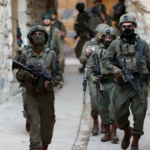
Today, all eyes in our Lebanon are turning to “Tansa,” which is today represented by the Lebanese Army. There are those who question him whenever he wants, and then come back and praise him with all the rhymes of poetry whenever he wants. He, Tansa, is required to “remove the bastard from the well” – and this is of course his duty – but where are the rest? Why do “officials” not dare to say what they know: Hezbollah committed acts punishable by law? Why did they stutter whenever they talked about him and change their colors? Are they afraid of a new May 7?
So, Hezbollah is not resistance. Let Lebanese diplomacy speak boldly, for once, because the army is not – and will not be – an alternative to it.
Let us return to the military institution represented by “Tansa” in the Lebanese events from “back then.” It was said in the past: As the people are, so is their army. If its people are divided, they will be divided, and if they are united, they will be united. The Lebanese Army faces a new entitlement. The streets are streets, Lebanon is more than two Lebanons, and developments threaten to explode. What is required of the Lebanese Army today in this diverse society?
Paragraph C of the third clause in the Lebanese National Accord Document, which was ratified by the House of Representatives on November 5, 1989, under the title: Liberating Lebanon from the Israeli occupation, stipulated that “all necessary measures must be taken to liberate all Lebanese lands from the Israeli occupation, extend state sovereignty over all its lands, deploy the Lebanese army in the internationally recognized Lebanese border region, and work to strengthen the presence of international emergency forces in southern Lebanon to secure Israeli withdrawal, and to provide the opportunity for the return of security.” And stability to the border region.”
Paragraph “A” of the second clause of the same document stipulated “to extend the sovereignty of the Lebanese state over the entire Lebanese territory through its own forces, to dissolve all Lebanese and non-Lebanese militias, and to hand over their weapons to the Lebanese state within six months beginning after the ratification of the National Accord Document.” This happened 37 years ago. Today, all that is required of him is. But history went the opposite way. Whenever some people were reminded of what was required, they were labeled as workers. Few dared to remember, and many “sang about the night of those who have weapons” in the name of the “resistance” and fell into a deep sleep.
Today is the time, and there is no longer any room – after everything that happened – to manipulate time, content, and what is required. But the party is still betting on “cutting off the hand” of whoever dares.
Experts in political science conclude that there are several schools of political behavior towards the Lebanese army, including the “taxi army” school, where this institution was paralyzed and used to protect politicians and transfer them from one location to another, transforming the Lebanese army into a “taxi army” or “helicopter” army for official and diplomatic transportation. The role of the army – gentlemen – is much greater than that, and the time has come for it to play it.
But what is happening is that the Lebanese discourse is often based on ambiguity – which is clearly evident today – as there are those who “slaughtered” him yesterday and returned today to venerate him even more. This wants the Lebanese army to suit its liking and to serve it. If he goes out of his will, he will be hostile to him, and if he says something he likes, he will hate him. No, the army is much bigger than that.
Simply and honestly, the Lebanese – the majority of them – have never felt that the Lebanese Army is their “true savior,” but they – the majority of them – love it and consider it “guarantee and reassurance.” National armies are usually “politicized,” but here they keep him away from politics to “protect” him from division. How – if this is the case – can an army commander answer a question of the magnitude posed by Lindsey Graham?
This question was asked today, and many in the military establishment still believe that “the strength of the Lebanese army is in its weakness.”
From another angle, there has not been a single enemy common to all Lebanese since the formation of Lebanon, and politics – as you know – have always interfered in the nature of the army in Lebanon. Weak politics spoils everything. This army was forbidden to extend its presence on the border strip out of respect for Hezbollah and Syria, which wanted to keep the flame of the Shebaa Farms burning. This is what it was, but today it seems that the decision – forced – was taken: the Lebanese army is the only one capable of protecting the homeland, the borders, and national security. But there are still – up to this moment – those who bet on the opposite.
Therefore, it is urgently required not to involve politics in the military, in order for the dream of the Lebanese – many Lebanese – to bet on the army institution alone to be realized.
Back to Lindsey Graham’s question. He – intentionally or not – brought the army back into politics. His question is not posed to an army commander, but to the Lebanese government. The army commander slipped into the maze of a vague answer: Hezbollah in the Lebanese context is not a terrorist. And now the party is sending a password that has become a “trend” on social media: The army commander has spoken. The army commander is supposed to have his say in extending his military presence, while politics is up to the Lebanese state.
Hezbollah is classified as a terrorist by the country that the Lebanese Army Commander visited to support his institution in what is the most difficult and critical period of time locally. The malicious question that was asked of him gave him a flexible answer: “In the Lebanese context, Hezbollah is not a terrorist.” What if the same question was asked to the Lebanese people? On Samer Hanna’s mother, Joseph Sader’s family, Pierre Gemayel’s children, Luqman Slim’s mother, and on the hundreds of families that were uprooted after the Beirut port bombing? You can imagine.
Let the army carry out its tasks, and let the Lebanese state carry out its tasks. Senator Lindsey Graham made a mistake on purpose, perhaps, and General Rudolf Heikal made a mistake with the answer, and it is true in politics because the state still deals with “Hezbollah” with the logic of intentional political duality, in order to avoid something greater than a party that has entered into the illusion of emperors.