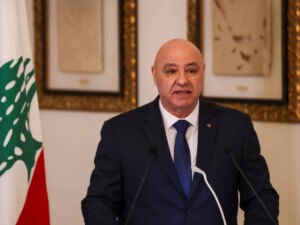
Tourism Minister Laura Khazen Lahoud announced that “medical tourism has become a strategic necessity for Lebanon.”
During her participation in the national conference to develop the medical tourism strategy in Lebanon, which was organized by the Faculty of Medicine and Medical Sciences at the University of the Holy Spirit – Kaslik, in cooperation with Our Lady of Help University Hospital, and under the patronage of the Minister of Public Health, Dr. Rakan Nasser Al-Din, Al-Khazen Lahoud expressed her joy, considering that the choice of the conference title was very successful in describing the stage, as medical tourism has become a “strategic necessity for Lebanon.”
She stressed that this sector, if managed well as an integrated public policy, could turn into a direct economic engine, a tool for enhancing confidence, and a continuous communication bridge between Lebanon and everyone who values its medical competencies at home and abroad.
Lahoud explained that the role of the Ministry of Tourism is to organize, promote and coordinate, without interfering in the tasks of the Ministry of Health, stressing that the Ministry’s work focuses on linking the tourist’s ambitions with the available service, linking the service to standards, and linking standards to the image of Lebanon and the visitor’s confidence.
She stressed that medical tourism requires a comprehensive system that includes organized reception, clear information, transparent pricing, protection of patients’ rights, and follow-up after treatment, in addition to close cooperation between the Ministries of Health and Tourism, Public Security, diplomatic missions, unions, and the hospital and insurance sectors.
She pointed out that one of the most prominent weaknesses lies in the lack of accurate data, calling for the establishment of a national information base for medical tourism that allows understanding patient sources, the most in-demand specialties, length of stay, cost, economic impact, and satisfaction levels, which helps in making more effective decisions in the areas of marketing, investment and training.
Lahoud presented a set of practical proposals, the most important of which are setting quality standards that cover the entire patient experience, creating a clear service path for the medical visitor, developing a national marketing strategy targeting specific markets, strengthening research partnerships with universities, and facilitating procedures in cooperation with the relevant authorities to ensure a safe therapeutic experience.
She stressed that medical tourism is not limited to a specific group, but rather represents a development engine that creates job opportunities and revitalizes multiple sectors, from hotels, restaurants, and transportation to supportive health services and professions, considering that it reflects the path of the Lebanese state’s recovery. She concluded her speech by thanking the Holy Spirit University – Kaslik, expressing her hope to reach a practical roadmap based on clear commitments and a renewed partnership between the Ministries of Tourism and Health, universities, and the medical and tourism sectors.
For his part, the Minister of Public Health, Dr. Rakan Nasser Al-Din, expressed his thanks to the Holy Spirit University – Kaslik for this initiative, considering that it brought together the Ministries of Health and Tourism to develop a strategy that enables Lebanon to regain its position in the fields of tourism and health. He pointed out that Lebanon was historically known as the “Hospital of the East,” based on a large balance of university hospitals and health institutions, a legacy that the Lebanese are proud of despite all the difficulties.
He added that the health sector has steadfasted despite the Beirut port explosion, the Corona pandemic, the collapse of the currency, and the war, stressing that this steadfastness is not only due to health policies, but also to the distinguished university academic level and the elite doctors and nurses and their good reputation abroad, where patients from all over the world come to them.
Nasser Al-Din pointed out that the tourism sector was severely damaged as a result of instability, which led to the loss of a large number of tourists who were coming to Lebanon for treatment, explaining that before 2019, these constituted about 30% of patients in some hospitals. He pointed out that the Ministry of Health sent letters to the Council of Ministers and all ministries to develop a health strategy concerned with medical tourism, considering that this strategy needs time, but it represents an essential step towards achieving the desired goal.
He also touched on the migration of medical talent, revealing that about 40% of Lebanese doctors emigrated during the crisis, before a portion of them returned, noting that the Ministry is working with insurance authorities to improve payment mechanisms, and during the current year it has spent more than five times more on hospital costs. He expressed his hope that the 2026 budget would expand the coverage of the Ministry of Health, which would enhance financial stability, improve hospital capacity, and support medical tourism.
The conference included specialized sessions that discussed ways to develop medical tourism in Lebanon. The first topic focused on the importance of this sector and the Arab world’s vision of it, the factors that enhance Lebanon’s attractiveness as a medical destination, and the elements of the success of a comprehensive national strategy, in addition to a dialogue session to draw a road map to reposition Lebanon in this field.
As for the second axis, it addressed Lebanon’s reality and opportunities, by examining bilateral agreements, the role of academia and the private sector, public sector priorities, the importance of digital transformation, and private hospitals’ strategies in attracting tourists.
At the conclusion of the conference, recommendations were read out that confirmed that medical tourism is no longer a secondary option or a complementary activity, but rather has become a strategic path that combines developing the health sector and stimulating economic growth. The interventions stressed that Lebanon has the basic components to be a regional center for medical tourism, despite the challenges, calling for a true partnership between the public and private sectors and universities, and moving from the discussion stage to implementation by launching an integrated national strategy with clear action plans and implementation mechanisms.