The Euro-Mediterranean Human Rights Monitor condemned the Israeli army’s use of chemicals to spray large agricultural areas in southern Lebanon and southern Syria. The Observatory considered that this deliberate targeting of civilian agricultural lands constitutes a serious violation of the rules of international humanitarian law, especially the prohibition on attacking or destroying objects necessary for the survival of the civilian population, and amounts to a war crime that threatens food security and the necessities of life in the affected areas.
The Observatory explained in a statement that the United Nations Interim Force in Lebanon (UNIFIL) received, on the morning of Sunday, February 1, 2026, a notification from the Israeli army of its intention to conduct air activity near the Blue Line, calling on the peacekeeping forces to remain in shelters, which led to the disruption of their work, as more than 10 field activities were canceled and it was not possible to carry out regular patrols along a third of the length of the line for more than 9 hours.
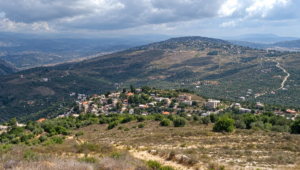
The Observatory indicated that during the period of “forced neutralization” of the work of international forces, Israeli aircraft were seen spraying chemicals over large agricultural areas, concentrated in the Aita al-Shaab area and its environs in southern Lebanon, warning of dire consequences that go beyond direct damage to crops, to affect the right to health and a sound environment, through long-term contamination of soil and water resources.
In a related context, the Observatory drew attention to the announcement by the Lebanese Minister of the Environment, Tamara Al-Zein, directing specialized teams to collect samples from the targeted sites and subject them to laboratory analyzes to determine the nature of the materials used, which reflects an official response to the possibility of using internationally banned or highly toxic materials.
The Observatory believed that this incident cannot be separated from the “scorched earth” policy followed by the Israeli army, as it comes as a continuation of a pattern of systematic destruction of agricultural lands that included burning about 9,000 hectares during the recent military operations using white phosphorus and incendiary bombs, stressing that this deliberate targeting of the necessities of life aims to undermine the living security of the residents of the south and push them into forced displacement by making their areas uninhabitable.
In the same context, the Observatory documented that Israeli aircraft sprayed pesticides of unknown composition over agricultural lands in the Quneitra countryside in southern Syria on Monday and Tuesday (January 26 and 27, 2026), which led to widespread crop damage and a serious threat to economic and food security, and a violation of the right to work and a decent standard of living for farmers, by destroying their sources of livelihood without any military justification.
The Observatory stressed that violating territorial sovereignty and crossing borders to target agricultural lands is in itself a violation of the United Nations Charter and the principles of public international law. He added that the use of chemicals of unknown composition, with their destructive effects on vegetation and a direct threat to public health, constitutes a grave and complex violation of the rules of international humanitarian law that prohibit the use of means of combat that cause indiscriminate damage or unnecessary suffering, or cause widespread and long-term damage to the natural environment.
The Observatory warned that these practices expose their perpetrators to international criminal accountability, as the Rome Statute of the International Criminal Court, especially Article Eight thereof, classifies intentionally directing attacks against civilian objects or destroying an opponent’s property without urgent military necessity as war crimes. He considered that the use of chemicals to destroy agricultural lands fulfills the material element of these crimes because of the widespread and long-term damage it causes to the natural environment and the residents’ livelihoods.
The Observatory reminded that this behavior represents a systematic operational pattern that Israel has been implementing for years in the border areas of the Gaza Strip, where aerial spraying of lethal chemical pesticides was used to impose buffer zones by destroying vegetation and destroying the “food basket,” ignoring international warnings of the catastrophic consequences for food security and public health. He pointed out that his previous documentation, supported by laboratory analyzes and expert testimony, proved that the materials used are highly toxic compounds with an uncontainable destructive effect that goes beyond destroying seasonal crops to long-term poisoning of soil and groundwater and harm to livestock.
The Observatory concluded that the facts, when read within the context of the continuous military targeting of agricultural lands with various types of projectiles, reveal a systematic policy of destruction that goes beyond military objectives, and aims to transform agricultural areas into unlivable lands by destroying economic infrastructure and sources of livelihood, which constitutes internationally prohibited collective punishment and an illegal means of pressure to push the population into forced displacement.
The Observatory called on the international community, especially the United Nations, to take immediate action to form an independent technical investigation committee to investigate the facts, which will collect samples of soil and affected crops in southern Lebanon and the Quneitra countryside and subject them to accurate analyzes to determine the nature of the materials used, the extent of their toxicity, and their violation of the Chemical Weapons Convention or international environmental protocols.
He also urged the states parties to the Geneva Conventions, whose legislation provides for the principle of universal jurisdiction, to open criminal investigations and prosecute Israeli officials involved in issuing orders to destroy the environment and using means of warfare with indiscriminate effects, as war crimes with no statute of limitations. He called on the UN Security Council to issue a binding resolution condemning these crimes, and considered obstructing the work of UNIFIL a flagrant violation of Resolution 1701, while guaranteeing the right of farmers to fair compensation and obliging Israel to bear the cost of land reclamation and addressing long-term environmental impacts.
The Observatory concluded by calling on the Lebanese and Syrian governments to submit an official declaration to the International Criminal Court in accordance with Article 12 (3) of the Rome Statute, to grant the court the necessary jurisdiction to look into crimes committed on their territories, and to block the path to the policy of impunity.