November 21, 2026

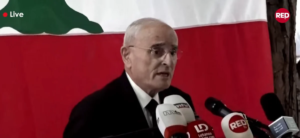
On the eighty-third anniversary of Lebanon’s independence, Information Minister Paul Morcos stressed that independence is still incomplete in light of the continued Israeli presence in parts of Lebanese territory, stressing that the restoration of the south, the return of families and prisoners, and the reconstruction of villages constitute basic conditions for achieving true independence, along with the independence of national decision-making, preserving unity among the Lebanese, and rejecting hate speech.
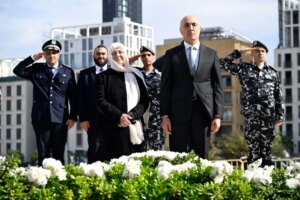
This came during a national celebration organized by the Ministry of Information for the first time in its outdoor courtyard on the occasion of Independence Day, in the presence of the Chairman of the Board of Directors of Lebanon Television, Dr. Al-Yassar Nadav Geagea, the President of Beirut Arab University, Professor Wael Nabil Abdel Salam, the Dean of the Faculty of Humanities, Dr. Siddiqa Lashin, the Head of the University’s Media Department, Dr. Iman Olaywan, the President of Knam Liban University, Professor Cinderella Abu Fayyad, the President of the Adult University at the American University of Beirut, Yola Sawan, and the representative of the Palestinian Embassy, Rima. Daoud, Dr. Jamal Fayyad, in addition to the administrative and press staff in the ministry.
The celebration began with an artistic performance by children who came from the south, raising the Lebanese flag, followed by the playing of the national anthem and a speech by the Minister of Information’s media advisor, Rita Najim Al-Roumi, who affirmed that the south remains present in the minds of the Lebanese and their land awaiting the return of its people and its bounties, noting that the anniversary falls this year “with a pain in the heart, and in the mind a will and determination stronger than adversity.” For his part, Minister Morcos explained that remembering independence is a national duty that doubles the Lebanese people’s adherence to state sovereignty over its entire territory, considering that true independence also includes freedom from regional and international conflicts, and building a strong and just central state that cares for all citizens without discrimination, and liberates the individual from sectarian and clientelistic instincts, stressing that freedom of expression is a protected right on the condition of respecting the dignity and sanctities of others.
The ceremony included artistic performances and national anthems presented by a group of children from the Lebanese Academy of Arts and Letters, and a Lebanese Dabke performance by the “Barja Folk Arts” band, in addition to directing a greeting to the south and distributing rice to the attendees at the initiative of the “Cedars of God” Association in Bsharri.
Following the celebration, a symposium was held in the Cultural Salon of Radio Lebanon entitled “The Role of the Arts alongside the Media in Spreading the Culture of National Unity and Renouncing Hate Speech,” moderated by Rita Al-Roumi, in which the Minister of Information, the Director and Owner of the Lebanese Academy of Arts and Letters, Rima Sfeir, and the Head and Coach of the Barja Popular Band, Dr. Khader Tarrou, participated.
At the symposium, Morcos stressed that independence is “an action we are taking, not a state of waiting,” calling for consolidating the values of dialogue, respecting the other’s opinion, and adhering to the national anthem in full, noting the keenness of the President of the Republic, General Joseph Aoun, on these constants and on supporting the Lebanese drama, southern affairs, and UNIFIL forces. For his part, Dr. Khader Trou stressed that Dabke expresses chivalry and chivalry and instills the values of love and cooperation among children to protect Lebanese folklore, while Rima Sfeir considered that music and collective absence establish perseverance, discipline, and the importance of integration and acceptance of difference to build the nation.