November 17, 2026

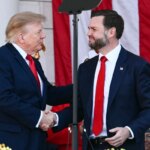
In light of the escalation of American political and military pressure on Tehran, US Vice President J.D. Vance ruled out the confrontation with Iran turning into a long-term conflict, stressing that President Donald Trump intends to end the conflict long before the end of his term, rejecting any military commitment extending for several years.
In an interview with Fox News, Vance explained that the US administration had committed to the American people not to fight “eternal wars,” noting that Trump saw the inevitable necessity of destroying the Iranian nuclear program as a direct threat to the national security of the United States. Vance strongly criticized the desire of some neoconservatives to keep his country involved in the conflict indefinitely, reiterating that Washington will not remain in the field forever, and expressing his confidence that Trump will emerge from this confrontation with “great results.”
In terms of evaluating operations, the Vice President considered that Washington had achieved “extraordinary achievements” represented in the destruction of the Iranian nuclear program and Tehran’s conventional military capabilities. On the other hand, Vance pointed out that the option of stopping military operations completely has not yet been decided, indicating that Trump is considering several options, and is likely at the current stage to intensify military and diplomatic pressure on the Iranian side.
These statements come at a time when the US administration is facing widespread political and diplomatic complications, especially after the failure of a 14-item memorandum of understanding that Vance prepared and negotiated with Tehran last June before it collapsed. This position intersects with Vance’s previous pledges in July 2024 not to send American soldiers to wars except when absolutely necessary, and with the political approach that Trump has adopted since the 2016 elections, refusing to engage in open conflicts.
On the internal level, the confrontation with Iran casts a heavy shadow on the American political scene, especially after the major defeat suffered by the Republican Party in the 2026 congressional midterm elections and the Democrats’ control of both chambers. While Trump acknowledged the war’s partial role in that loss, Vance went further, considering that the conflict with Iran was the main reason for his party’s defeat.
In the face of these facts, the US administration finds itself surrounded by a very precise equation that combines a pledge to end the war and a threat to continue pressure, through which it seeks to achieve its strategic goals in Iran without sliding into an open confrontation into the unknown, in light of increasing pressure to prove the feasibility of political and military escalation.