November 16, 2026

The Middle East and Gulf region is witnessing a widespread movement to sign defense agreements and form new military alliances, coinciding with the continued targeting of vital sites with missiles and drones, which opens the door to serious questions about the practical feasibility of these understandings and their ability to provide effective field protection for the countries that signed them, in light of increasing Israeli skepticism about their credibility and the willingness of their parties to intervene directly.
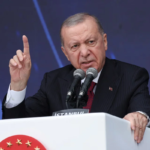
In this context, a new mutual defense agreement was signed in Istanbul last Friday between the Emir of Qatar, Sheikh Tamim bin Hamad Al Thani, and Turkish President Recep Tayyip Erdogan, at the conclusion of the 12th session of the Turkish-Qatari Supreme Strategic Committee, which resulted in 5 separate agreements. The Emir of Qatar expressed, through the “X” platform, his country’s aspiration to develop the strategic partnership and determine priorities for joint work, while Erdogan stressed that the agreement will add a new dimension to bilateral relations.
This agreement comes as an extension of a series of military understandings that the region has witnessed recently, most notably the “Mecca Joint Defense Agreement” signed between Saudi Arabia, Turkey and Pakistan on August 7, which was approved by the Turkish Parliament on November 5, in addition to Riyadh’s announcement last July of the formation of the “Multinational Maritime Defense Alliance” to protect the waterways with the participation of several regional countries. The moves also included the launch of the “Badr” project for defense industries on October 21 with the participation of Qatar, Indonesia, Pakistan and Turkey, and Istanbul’s hosting of the “R4” mechanism meeting that includes Turkey, Egypt, Pakistan and Saudi Arabia on October 23, in addition to the Gulf states’ approval on November 10 to establish an advanced command center for the unified military command in Kuwait during the Joint Defense Council meeting in Manama.
Despite the large number of these official announcements, a press report published by writer Lior Ben Ari on the Israeli “Ynet” website indicates that there is a wide gap between the expansion of alliances and the reality on the ground, recalling the continuation of attacks with missiles and drones. Warning sirens were sounded twice in Bahrain, coinciding with the Iranian Revolutionary Guard’s adoption of a six-drones attack targeting a US air defense radar at the Riffa base, while the Saudi-led coalition intercepted three drones and two ballistic missiles launched by the Houthis towards Riyadh and the eastern region.
In its reading of these developments, the report relied on the analyzes of Dr. Yoel Gojansky, a former official in the Israeli National Security Council and a prominent researcher at the INSS Institute, who confirmed in his article entitled “Alliances Without Commitment” that Arab countries prefer to build multiple layers of partnerships rather than rely on a single binding alliance, considering that the large number of these alliances reflects a weakness in mutual commitment. Gojansky pointed out that the previous Turkish military presence in Qatar did not prevent the repeated Iranian and Israeli attacks on Doha, criticizing what he described as the absence of an actual response or condemnation by Ankara and Erdogan regarding those attacks.
Far from the Israeli assessments that focus on the limits of direct military intervention and ignore aspects of industrial and training cooperation and joint coordination, the totality of these developments confirms that the true test of security partnerships goes beyond the halls of signing and diplomatic statements, and becomes dependent on political and military readiness to bear the cost of defending allies when necessary.