November 11, 2026

The President of the Republic, General Joseph Aoun, held a series of meetings at Baabda Palace that included sovereign, security and economic files, during which he stressed the need to maintain the cohesion of the internal situation in light of regional and international developments. Aoun warned against being drawn into internal conflicts, stressing that extending the state’s authority is not limited to confiscating weapons in its hands, but rather includes achieving security and securing the economic and social capabilities of the people of the south. He also sent a decisive message to critics of the military establishment, considering that “no one can be sovereign and claim to love Lebanon while criticizing the army and security forces that work to maintain security and stability.”
These positions came during Aoun’s reception, on Wednesday, November 11, 2026, of a delegation from the “Leaders Club” initiative, which presented two economic projects for recovery and reconstruction. Ramzi Al-Hafez, speaking on behalf of the delegation, explained that the initiative was established in 2018 through the “Lebanon Opportunities” magazine and includes more than 85 major institutions representing various economic, financial and service sectors. Al-Hafiz presented two studies: the first entitled “Relaunch and Revival” as an alternative plan for recovery, and the second entitled “Economic Reconstruction” focusing on reconstruction and regional integration, stressing the initiative’s readiness to cooperate with the President of the Republic on economic and livelihood issues.
For his part, Aoun stressed that the private sector constitutes the backbone of the national economy, considering that Lebanon needs security and political stability to achieve growth more than foreign aid. He pointed to Lebanon’s entry into the Indo-Middle East and European Economic Corridor (IMEC) port club, attributing the economic crisis to the repercussions of the war that was “imposed on us” and the Iranian-American war, in addition to the greed of merchants. He explained that his visits to Arab countries aimed to return Lebanon to the Arab map, discussing plans for the gradual transition to digitization in public administration and the electronic identity project. Regarding the financial file, he called for the adoption of the financial gap law away from populism, stressing in the southern file that reconstruction and providing economic alternatives are the basis for enabling the people of the south to live in dignity.
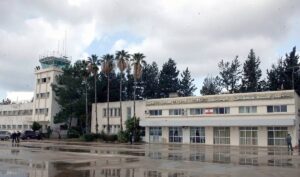
At the ministerial level, President Aoun briefed the Minister of Public Works and Transport, Fayez Rasamny, on the preparations for the start of operation of Rene Mouawad Airport in Qlayaat, and the importance of reopening the Abode border crossing to relieve pressure on the Masnaa crossing, in addition to presenting the broad outlines of the Masnaa crossing project.
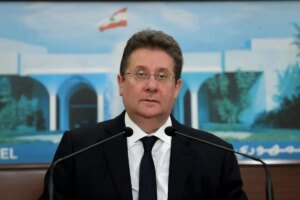
Regarding parliamentary matters, Aoun received the Chairman of the Finance and Budget Committee, MP Ibrahim Kanaan, who considered that the state’s official position represents a conscious and wise position that requires rallying around it, stressing adherence to national constants and neutralizing the army from tensions. Kanaan stressed that the budget discussions are proceeding without imposing new taxes, reiterating that addressing the financial gap is based on distributing losses and protecting the rights of depositors. Aoun also discussed with MP Jamil Abboud the general situation in Tripoli and the north and the economic potential of the city.
Within the framework of social meetings, Aoun received the founder and president of the “We Are All Family” association, Dr. Karen Sami Gemayel, accompanied by Jessica Moawad, where initiatives to strengthen the steadfastness of the people of the border villages (Rmeish, Dibal, and Ain Ebel) were reviewed. Al-Jamil presented an urgent intervention plan to support the health, educational and economic sectors in these towns, in addition to a long-term national plan, noting that supporting the survival of the people protects the state’s borders and sovereignty. For his part, Aoun praised the association’s efforts, stressing the state’s keenness to support the steadfast and displaced people of the south alike.