November 10, 2026

The island
From accusations of applying Islamic law to widespread controversy over the original ingredients of shawarma, the American senator-elect from the state of Michigan, Abdul Rahman Al-Sayed, known as “Abdul Al-Sayed,” succeeded in turning a campaign targeting him during the elections into a wave of interaction on social media sites, after he mockingly launched what he called the “Shawarma Law,” whose impact was not limited to the virtual world, but was also reflected in a restaurant in the state of Michigan.
The story began about a week before the results of the American midterm elections were decided, when Al-Sayyid, who became the first Muslim senator to reach the Senate in the history of the United States, faced smear campaigns and accusations of an anti-Islamic nature, during which his competitors claimed that he would seek to implement Islamic law instead of the American Constitution if he won.
But Al-Sayed chose to respond in an unconventional way, using sarcasm instead of entering into a direct political debate, as he announced that he did not support the application of Sharia law, but rather supported what he called the “Shawarma Law.”
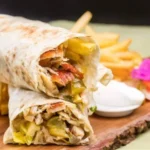
Not only did he launch the name, but he set a rule that he described as strict for preparing authentic shawarma, saying: “Authentic shawarma should never contain lettuce. If you get shawarma and find lettuce in it, it is not shawarma, it is just a sandwich, and someone has lied to you.”
He added jokingly: “If you want the best shawarma in your life, go to Amo Sami Shawarma Restaurant.”
This joke quickly turned into a widespread conversation on social media platforms, especially since Al-Sayed had sparked a remarkable reaction earlier when he directed the word “darling” to US Vice President J.D. Vance, in a phrase that was widely spread among followers.
The repercussions of the “Shawarma Law” did not stop at the limits of comments and publications, as the management of a restaurant in the city of Warren, within the Detroit metro area, announced that it had recorded a heavy turnout that exceeded usual levels, since Al-Sayed won the elections on Tuesday, as a result of his praise of the restaurant during his election campaign.
After announcing his victory, the elected senator returned to controversy again, after he wrote on his social media accounts: “The Shawarma law must be respected,” renewing his adherence to the rule he set regarding the ingredients of the famous Arabic meal.
However, the prank quickly opened a broader discussion about the origins of shawarma and methods of preparing it, after one of the followers objected to Al-Sayed’s recommendation, considering that the restaurant he praised does not offer traditional shawarma, but rather just a chicken sandwich.
The observer explained that, in his opinion, real shawarma consists of chicken, pickles, garlic sauce, and perhaps pomegranate juice, criticizing the type of spices used in the restaurant, which he considered changed the authentic taste.
Al-Sayed did not ignore the criticism, but rather responded by explaining that the recipe that the follower spoke about represents the classic Syrian shawarma, noting that there are Palestinian and Lebanese differences in the types of bread, toppings, and spices.
Thus, the discussion moved from a political debate about Islamic law to a cultural dialogue about Arab cuisine and the diversity of its recipes, amid continuous interaction between the elected senator and his followers.
One follower summed up the impact of Al-Sayed’s praise of the restaurant, saying: “The restaurant was usually already crowded, so imagine how things are now!”
Between political satire and controversy over the ingredients of shawarma, the “Shawarma Law” transformed from a sarcastic response to electoral accusations into an interactive phenomenon that extended from social media platforms to a Michigan restaurant, and highlighted the presence of Arab culture in the American public debate.