November 10, 2026

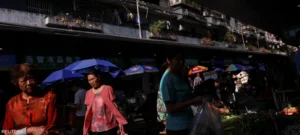
China faces a huge strategic challenge to meet the food needs of more than 1.4 billion people, who require about 4 billion meals daily. This challenge comes in light of limited agricultural land and water scarcity, in addition to the growing demand for food products and the ongoing trade tensions with the United States.
Despite its vast area, the country suffers from a scarcity of arable land due to the nature of the mountainous and desert terrain and the encroachment of urban expansion, which prompted the capital, Beijing, to enhance local production to reduce dependence on foreign imports.
In this context, Chinese President Xi Jinping has placed achieving self-sufficiency in basic grains, especially rice and wheat, as a top national priority, by protecting the agricultural area, developing irrigation techniques, and developing high-yield seeds.
China’s total production of grains reached about 715 million tons in 2025, with its aspiration to raise production capacity to 725 million tons by 2030. However, the continuous rise in meat consumption has led to a direct increase in demand for feed, especially soybeans, of which China’s imports recorded about 111.8 million tons in 2025, compared to local production that did not exceed 20.9 million tons.
Amid the existing trade disputes with Washington, Beijing has diversified its sources of supply. Brazil has become the main supplier of soybeans, accounting for about 74% of China’s imports in 2025. In parallel, China has expanded its investments in ports and international transportation networks to ensure the stability of food supplies and limit the repercussions of any trade or geopolitical disturbances.
These measures embody the transformation of food security into a central pillar of the Chinese strategy, amid tireless efforts to find a sustainable balance between enhancing local production and securing the flow of vital imports.