November 3, 2026

The Wall Street Journal revealed, in a report prepared by journalists Alexander Ward, Lara Seligman, and Shelby Holiday, that American forces carried out a series of limited and secret military strikes against Iranian targets during the past weeks, the most recent of which was an attack targeting the strategic island of Qeshm at the entrance to the Strait of Hormuz, on Monday. This development comes at a time when US President Donald Trump was publicly reducing the possibility of renewed war, speaking of an opportunity to reach a diplomatic agreement, coinciding with the midterm congressional elections scheduled for Tuesday.
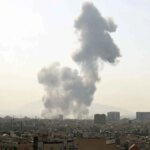
The attack on Qeshm Island was part of a limited and undeclared military campaign carried out by Washington. Trump told reporters on Monday, saying: “We fought a war with Iran and we won,” adding: “I don’t even know if it can be called a war, because we haven’t fought any fighting for months.” On the other hand, American officials and social media posts reported hearing explosions around the island on Monday, amid official American assurances that limited strikes would continue for weeks.
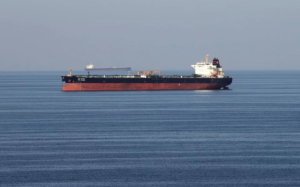
American officials described these operations as “defensive,” noting that they aim to prevent Iran from targeting commercial ships in the Strait of Hormuz. In the same context, officials revealed that two military incidents occurred on Monday. The first, during which the Iranian Revolutionary Guard fired a surface-to-air missile towards an American fighter, which responded in self-defense, and the second, in which American forces intercepted a missile launched by the Revolutionary Guard from Qeshm Island towards commercial ships.
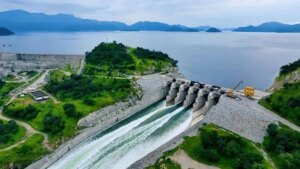
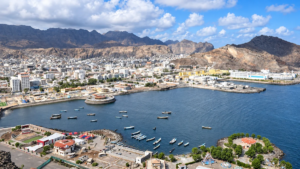
Unlike previous stages, the US administration deliberately keeps these operations out of the limelight to avoid suggesting readiness to resume large-scale combat operations. Qeshm Island is of great strategic importance due to its location at the entrance to the Strait of Hormuz, and its host to an underground missile site, a naval base, and a major water desalination facility. While the US Department of Defense referred questions to Central Command, which did not respond immediately, an American official merely confirmed that it would continue to deal with threats against US forces.
On the other hand, Iranian Foreign Ministry spokesman Ismail Baghaei announced, during a press conference in Tehran on Monday, that “the ball is now in the American court” regarding any potential agreement, adding: “We have presented our demands clearly and transparently, and Iran’s demands are reasonable and logical.” Other Iranian officials, including Supreme Leader Mojtaba Khamenei, had warned of an Iranian response inside and outside the Middle East if the United States renewed the confrontation.
In addition to the limited strikes, the US administration continues to study harsher military and economic options. Senior officials discussed the feasibility of carrying out additional air strikes, and offered Trump tightened sanctions and strengthened the trade blockade. In this context, the Commander of US Central Command, Admiral Brad Cooper, visited the White House last week to inform Trump of the latest developments in the confrontation, while Centcom laid the foundations for broader strikes by strengthening missile defense systems and munitions in the region.
The United States had previously informed the Gulf states of the need to prepare for the possibility of carrying out a “short and intense” military operation against Iran after the midterm elections. Despite these preparations, Trump and his vice president, J.D. Vance, toned down their escalatory tone, indicating that continuing negotiations to dismantle the Iranian nuclear program may lead to positive results. Trump wrote on social media that oil prices are falling because “people feel” that the war will not be renewed, and when asked Monday if he was considering striking Iran after the election, he answered with one word: “No.” However, officials in his administration confirmed that the president had not decided on his options completely, so these data reveal a paradox represented by negotiations and a presidential calm speech, paralleled by an undeclared military escalation on the ground and preparations for a broader confrontation in the event that diplomacy falters.