October 8, 2026

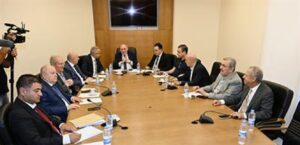
The Public Works, Transport, Energy and Water Committee held a session headed by Representative Saji Attiya, and in the presence of committee members and representatives of departments and concerned authorities, devoted to discussing the file of operating the two production plants in Zouk and Jiyeh.
During the meeting, the committee heard presentations made by the Director General of the Electricité du Liban, Kamal Hayek, representatives of the institution, the authority regulating the electricity sector, and factory managers, in addition to the operating company.
At the conclusion of the meeting, the Chairman of the Committee, Representative Sajia Attia, announced that the discussion led to a practical conclusion requiring the Board of Directors of the Electricité du Liban to hold an initial meeting, next Monday, to discuss the mechanisms leading to the start of operation of the Jiyeh plant and the unit operating in the Zouk plant, in direct coordination with the manufacturer.
Attia pointed out that laboratories continue to stop working in light of citizens’ suffering from the high cost of electricity, considering that “the lack of coordination between the concerned authorities during the past years contributed to delaying the processing of the file.” He stressed the importance of “seriousness and cooperation, away from disputes, to reach results that provide electricity for citizens.”
For his part, the committee’s rapporteur, MP Muhammad Khawaja, confirmed that the committee exercised its oversight role to find solutions that relieve the Lebanese from the burden of exorbitant bills, noting that there was “a discrepancy between the concerned parties, including the previous and current boards of directors, regarding the technical aspects of the file.”
Khawaja explained that representatives of the concerned authorities reported that securing sufficient quantities of fuel may enable raising the electrical supply hours to range between eight and ten hours per day, at a time when “the liquidity crisis and securing financing still constitute the most prominent obstacles,” stressing the committee’s diligent follow-up of this file based on the highest interest of citizens.