October 8, 2026

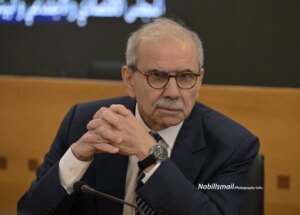
Representative Yassin Yassin directed sharp criticism at the feasibility of continuing resistance work in Lebanon after the completion of the liberation of the south, calling on the Secretary-General of Hezbollah, Sheikh Naim Qassem, to answer fundamental questions related to the function of weapons at the current stage.
In statements made exclusively to the “Lebanon Debate” website, Yassin explained that the liberation of the south in 2000 should have constituted a turning point for the country’s transition from the logic of resistance to the logic of building the state and its institutions. He wondered about the justification for the continuation of weapons after the end of the occupation, and whether this would open the door to other goals that go beyond the traditional concept of resistance.
Representative Yassin considered that the “wars of support” had only brought more labyrinths and crises to Lebanon, holding it responsible for the heavy prices citizens pay in the form of displacement, comprehensive destruction, and obstructing the course of reconstruction. He pointed out that Israel, in light of its well-known ambitions, gets what it wants on a golden platter while the establishment of the state is obstructed.
Yassin addressed Sheikh Naeem Qassem by saying that the resistance that liberated Beirut, the Bekaa, and the South until the year 2000 played its role, questioning the feasibility of its continuation and its responsibility for entering Lebanon into a labyrinth with an unknown end.
He stressed that the highest priority for the current stage must focus on rebuilding the state and ensuring the return of the displaced to their villages, raising a series of questions from Hezbollah’s leadership: “When can the people of the south return to their homes? When will the reconstruction process begin? And how can we ensure that this reconstruction will not be destroyed again?”
In conclusion, Yassin stressed that the first and second support wars caused severe damage to the capabilities of the Lebanese state, which was already suffering from collapse, renewing the question about the feasibility of continuing with a war that imposes a high cost on the nation and its citizens.