October 6, 2026

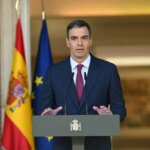
Spain entered a political phase open to all possibilities, after Prime Minister Pedro Sanchez announced the dissolution of the government and parliament and called for early general elections on November 29, that is, 9 months before their original date, following his loss of the parliamentary majority and the exacerbation of several domestic and foreign crises.
This dramatic decision, which was announced today, Monday, according to a report prepared by journalist Dov Gil Har for the Israeli broadcaster “Kan,” came after extensive consultations conducted by Sanchez throughout the weekend with members of his government, party heads, and political partners, thus retreating from his previous pledges to complete his term until its end. In a statement addressed to the public, Sanchez acknowledged that his government “committed mistakes” and was unable to achieve all of its goals, adding: “I know that there is dissatisfaction, and it angers you to see your interests trampled… We need to expand the support of the people in order to achieve a majority and subjugate the elites.”
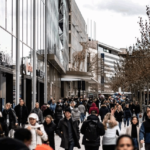
The worsening housing crisis accelerated this step, as the government failed last Friday to pass two decrees related to this sensitive issue, after the centrist Catalan “Guents” party joined the opposition parties to drop the two measures. This failed government initiative came in response to a public storm sparked by the eviction of an 87-year-old woman named Maricarmen Abascal from her home in Madrid, which sparked massive protests in support of thousands of citizens demanding urgent solutions to the housing crisis over the weekend.
These internal crises coincide with political pressures related to the issue of the city of Ceuta, which exploded last July 30 after tens of thousands of Moroccan citizens breached the borders of the Spanish enclave in North Africa, which dealt a blow to Sanchez’s claims of his ability to secure the borders, and was exacerbated by accusations leveled by the opposition against his pro-immigration policies against the backdrop of settling the conditions of about a million irregular immigrants inside the country.
In a related context, the Israeli Broadcasting Corporation report indicated that Sanchez, who is considered one of the most prominent global leaders opposed to Israel, had accused Israel and Russia in late last August of being behind a massive disinformation campaign that encouraged the storming of Ceuta. However, the report pointed out that this claim does not intersect with the results of the official investigations conducted by the Spanish police.
With this decision, Sanchez puts the fate of his government in the hands of the ballot boxes, in an attempt to renew his legitimacy and overcome the parliamentary and popular impasse, so that the upcoming election next November will determine whether Spain is heading towards new political stability or a radical transformation in its political map.