October 6, 2026

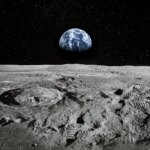
The United States is seeking to prepare a nuclear reactor to launch to the moon by December 2030, as part of a heated race with a joint Russian-Chinese project that aims to provide energy for lunar stations by 2036, amid mounting warnings that accelerating the pace of these programs may double the challenges of space safety and environment.
According to a report published by the American newspaper “The New York Times”, the US Aeronautics and Space Administration (NASA) issued directives at the end of last August to its contracting companies to prepare to build a reactor capable of withstanding the rigors of space flight and operating on its own without maintenance, to be installed near the south pole of the moon.
This intense competition is not limited to just generating electricity, but extends to securing the vital energy necessary to establish permanent human bases, explore vital resources such as frozen water, and support exploration missions deeper into the solar system. Through its project called “Lunar Reactor 1,” NASA aims to produce about 20 kilowatts of electricity, provided that it operates on the surface of the moon for five continuous years without any human intervention. In return, Moscow commissioned its government institutions to develop a reactor called “Selena” to feed the lunar stations led by China, with an expected capacity of 10 kilowatts, and independent operation for ten years.
Nuclear energy represents an indispensable means of operating lunar facilities during long periods of darkness and in locations where solar energy alone cannot meet needs. However, getting a nuclear reactor up and running safely requires overcoming significant engineering and technical hurdles related to transportation, landing mechanisms, cooling systems, and operation in a low-gravity environment. Both the United States and Russia intend to send the reactors inert before they start operating to reduce risks during transportation, but this measure does not eliminate the need for strict safeguards to prevent fuel leakage or catastrophic accidents during the launch, flight, and landing phases.
In this context, Edwin Lyman, director of the Nuclear Safety Program at the Union of Concerned Scientists, warned that introducing nuclear energy into the current space race could make it more dangerous. These fears bring to mind the incident of the fall of the Soviet satellite “Cosmos 954” in 1978, which returned to the atmosphere in an uncontrolled manner and spread radioactive materials over the northern lands of Canada. On the surface of the moon, urgent questions arise about how to deal with the possibility of the reactor malfunctioning or being damaged, and the risks of contamination of the surrounding areas, especially in light of the difficulty of direct intervention in maintenance work.
At the fuel level, the selection of nuclear material represents an additional technical and political challenge. NASA seeks to use highly concentrated low-enriched uranium, at a time when domestic American supplies are limited, while Russia is one of the most prominent producers in the world. It should be noted that Washington has banned imports of Russian uranium since 2024 against the backdrop of the war in Ukraine, which doubles the difficulty of securing a stable supply chain for the American program. On the other hand, thinking about using highly enriched uranium raises security concerns regarding the possibility of using it for weapons purposes, despite the technical advantages it provides in reducing the weight of the reactor.