October 2, 2026

A high-ranking source in Hezbollah revealed to the website the complexities of the internal political scene, in which disputes with political forces and the crisis in the relationship with Baabda Palace are intertwined, in parallel with harsh field pressures imposed by the situation in the south on the party’s accounts and positions.
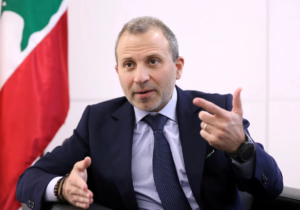
The source confirmed that there is “a great reproach” against the head of the Free Patriotic Movement, former MP Gebran Bassil, as a result of his recent positions, while noting that this issue should not be dealt with in the way former MP Nawaf al-Moussawi dealt with the issue. At the same time, he stressed that the relationship with Bassil is a completely separate issue, and must not be mixed with the path of the institutional relationship with the Presidency of the Republic.
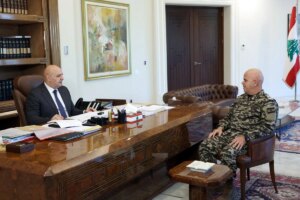
Regarding the communication channels with Baabda Palace, the source explained that they are “suspended and not interrupted,” pointing out the possibility of reactivating them if serious political developments occur, specifically in the event of a new invitation to negotiations that is rejected by official Lebanon, as then it is possible to return to direct discussion of the existing disputes. This approach reflects the party’s connection to open channels of communication with the state’s negotiating path, not merely a desire to reduce tension, while being keen to separate its party differences from state institutions.
At the internal organizational level, the source acknowledged the existence of a state of deep tension at the organizational and political levels within Hezbollah, which was sometimes reflected in the control of statements issued by some leaders, without this rising to the level of organizational division, but it reflects challenges in the mechanisms for managing disputes and controlling the leadership rhythm.
On the ground, the source described the situation in the south as “shaky,” noting that Hezbollah found itself “alone on the Lebanese scene” amid pressure from multiple sides, which is directly reflected in its internal political calculations. In this context, the source stopped at the expression “tactical defect,” explaining that it expresses serious errors extending from decision-making to implementation mechanisms, without considering it a comprehensive review of the course or placing responsibility on one party, but rather placing it in the context of the broader political and field conditions.
These four files – blaming Bassil, suspension of communication with Baabda, internal tension, and southern pressures – combine to form a complex scene. The narrower the movement’s margin in the south, the more sensitive the party became towards its positions and relationships, and the more difficult it became to contain differences in light of faltering communication channels.
The source concluded by emphasizing that Hezbollah, despite the intensity of tension, is not completely closing the door to the resumption of political communication, provided that the return to dialogue is linked to new circumstances and a clear political path, in light of the current widening gap between the parties concerned.